
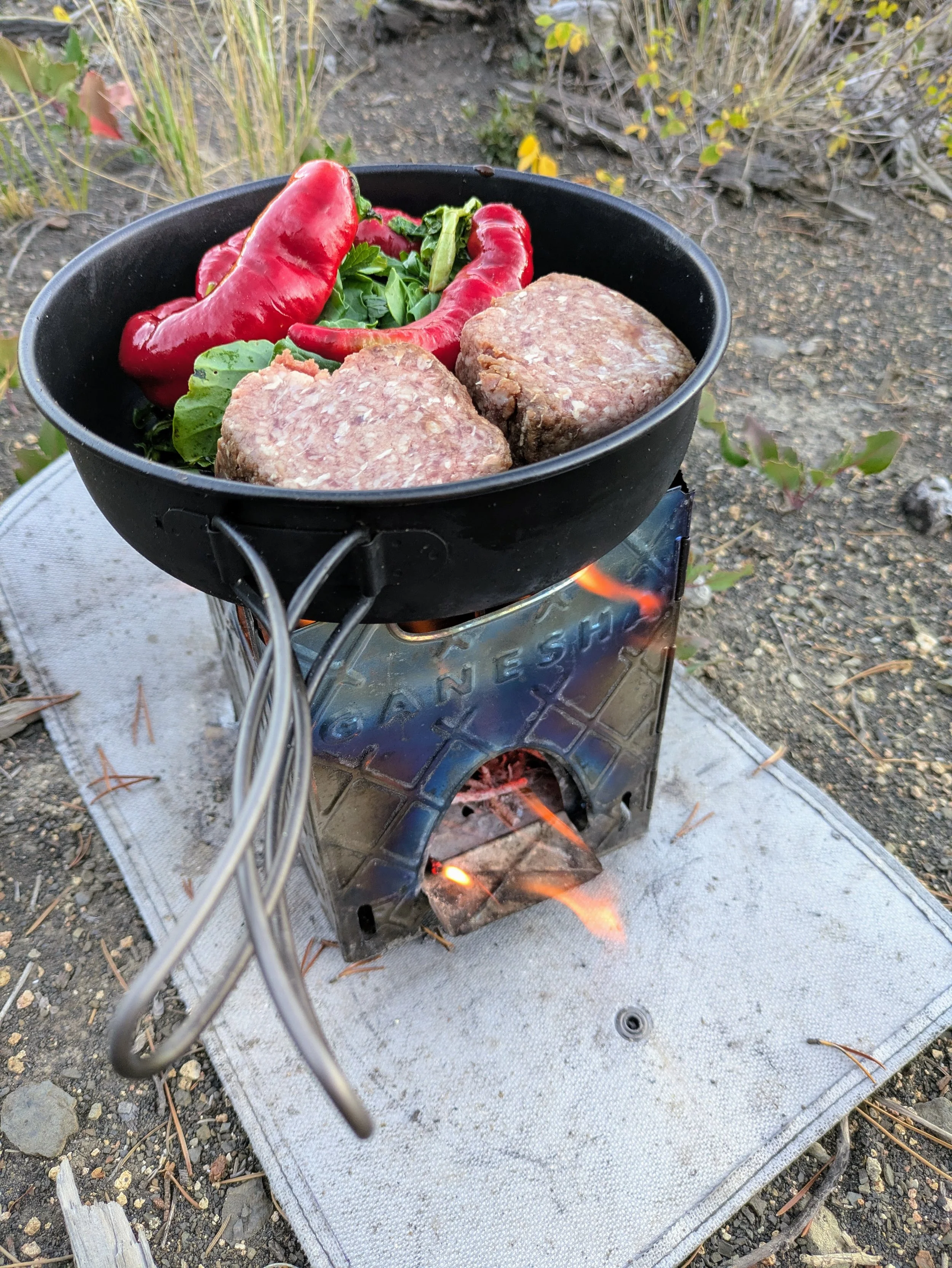
Fall Camping & Wood Fires Go Together
Fall Camping and Wood Fires Go Together
Fall in the mountains of Colorado is moody. Days of rain, snow on the high peaks, and then brilliant, low-angle sunshine that makes you want it to last forever. Now is the time to take advantage of any bit of good weather and get outside before the snows reach down to the valley floors.
Using my Ganesha stove is great on a hot summer afternoon - but on a fall evening with a chill in the air, it’s dreamy.
October 2026 · Cooking Full Meals · Tech Focus · Shinya Nagaoka
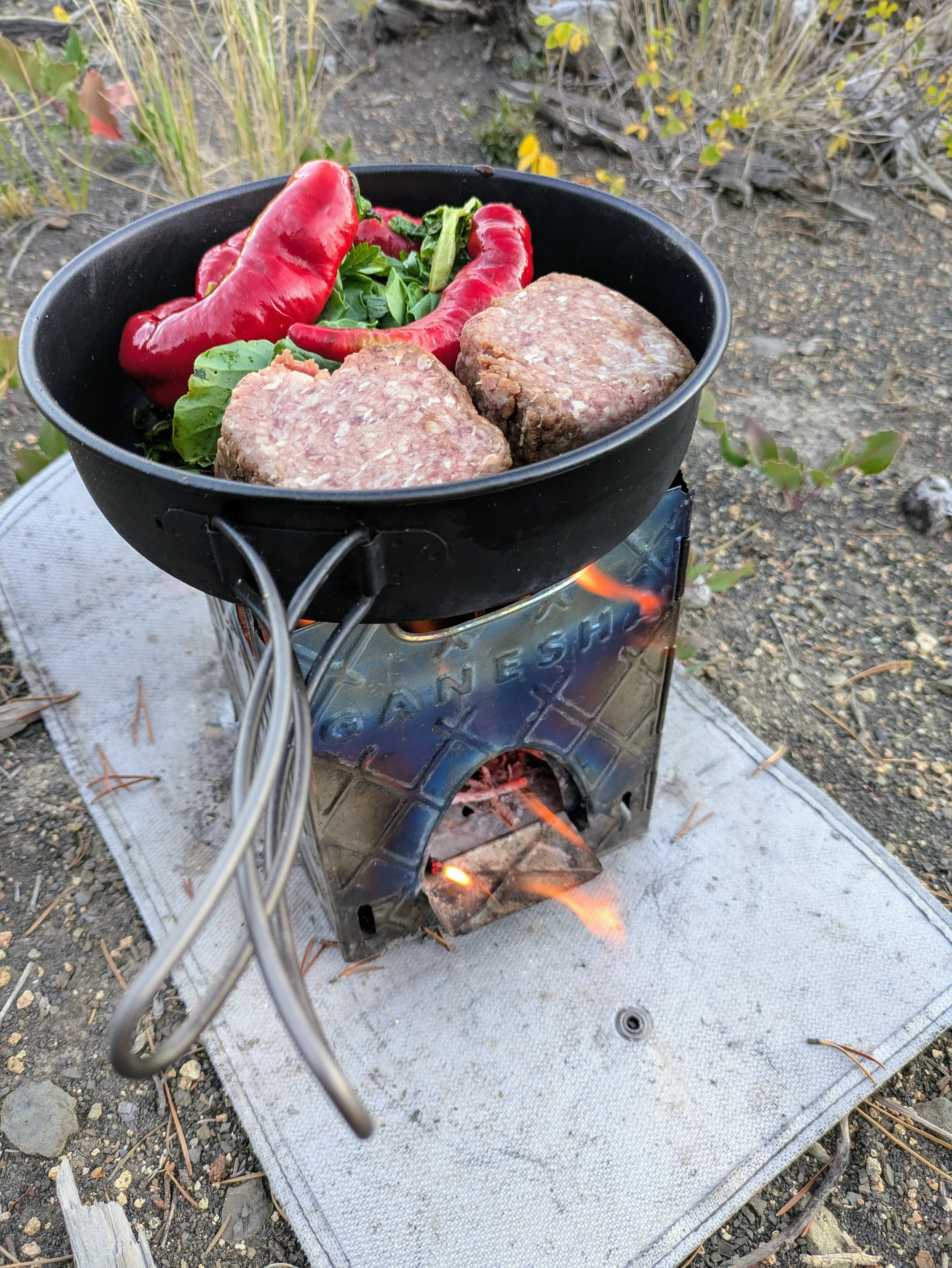
Smashburgers and local mild chilies at 10,000 feet.
Fall in the mountains of Colorado is moody. Days of rain, snow on the high peaks, and then brilliant, low-angle sunshine that makes you want it to last forever. Now is the time to take advantage of any bit of good weather and get outside before the snows reach down to the valley floors.
Using my Ganesha stove is great on a hot summer afternoon - but on a fall evening with a chill in the air, it’s dreamy. Here’s what I do differently:
Since it’s so pleasant to sit around the stove, I cook full meals. Recent ones include an Indian curry, smashburgers with local mild peppers, and a breakfast of bacon and eggs. A nonstick titanium frying pan is a great help for this, and I’ve also lugged in a 2-liter cookpot for pasta (both sit on top of the stove).
I gather extra firewood. After I’m done cooking, I put thicker sticks vertically in the stove to make a nice warm fire.
I prep everything to make hot coffee in the morning while I’m sitting in bed. I gather a selection of sticks, fill my pot with water, and put the stove within arm’s reach of my sleeping bag. In the cold morning, I sit up, start the fire, put on the pot to boil and doze off for a few minutes. If I’ve done it right, I wake back up to a pot of boiling water and can then sit up in bed, drinking coffee and watching the sunrise.
When it’s time to simmer your dinner on the Ganesha stove, here’s the trick. Make sure you have a bed of coals, which usually takes burning for 10-15 minutes. At first, that might be enough for simmering, but the fire will keep cooling. Then, use small sticks (about the size of your pinky) one or two at a time to keep the flame burning.
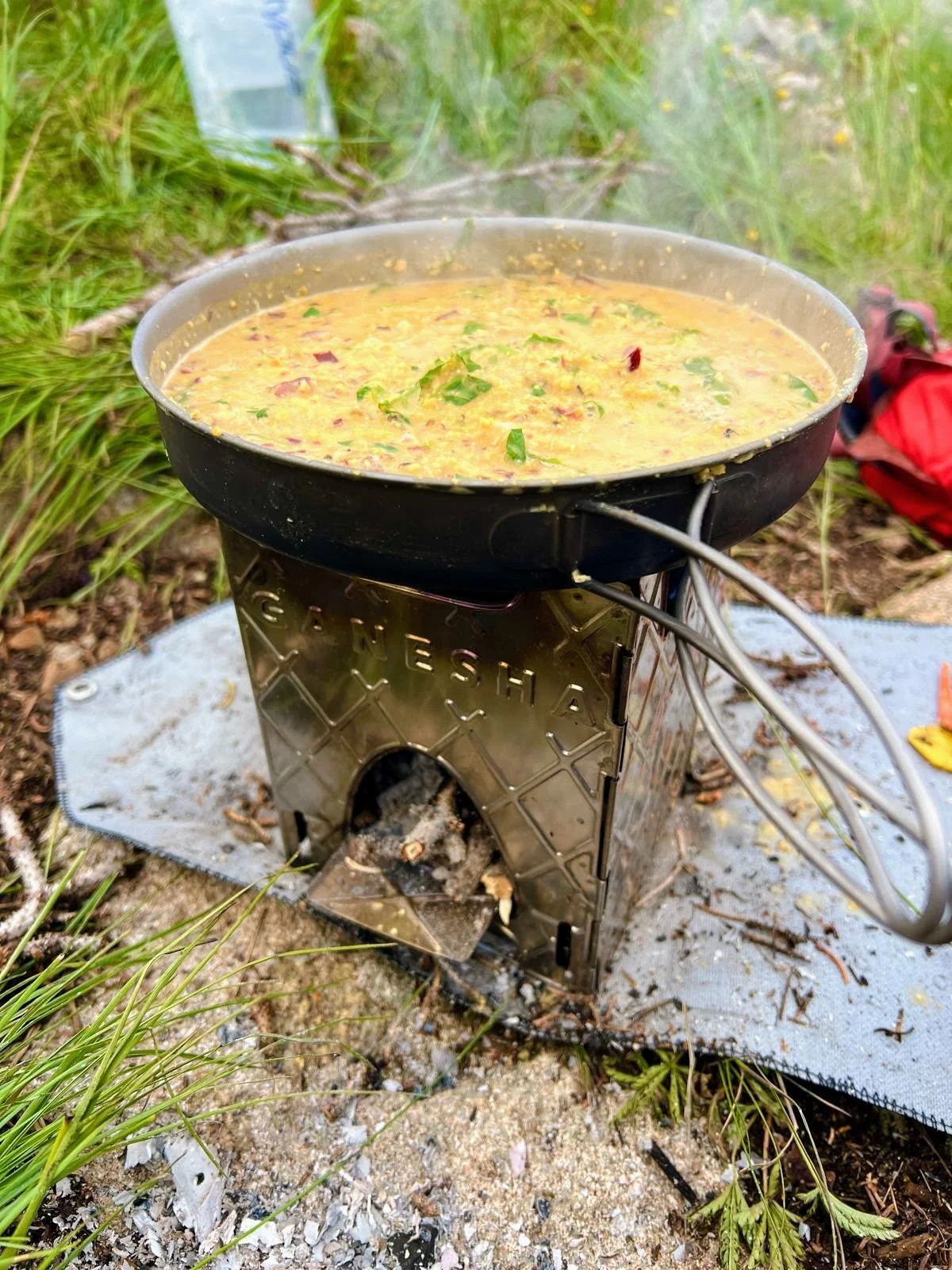
A scrumptious curry with egg. All the ingredients fit in a small container, and cooking took less than 10 minutes.
Tech Focus: What’s With the Piece That Says “Top”?
Every Ganesha stove comes with a metal piece attached to the main stove body with a chain. When you unfold the stove, it fits right around the stove pegs and sits on top of the inner chamber. Simple - but what’s it for?
First, it keeps the stove from collapsing back down. That’s critical, but not its main purpose.
We call this piece a “secondary air diverter” because when it’s in place, it shunts air from beneath and around the stove into the fire (that’s the secondary air). All the little holes punched into the firebox, right below the diverter? That’s where the secondary air comes into the fire.
The outer firebox is designed to let air in at the bottom and flow all around the inner firebox. As that air heats against the inner firebox, it rises. So it naturally hits the diverter and pushes itself into the fire. No moving parts.
This makes the fire much more hot and efficient, and gives the fire extra superheated air to help it burn smoke. Will the stove work if you don’t put the plate in? Definitely - just not as well.
I didn’t want anyone to lose this key part of the stove, so I put it on a chain. And the word “top”? With that facing up, the chain won’t get in the way.
Influencer Spotlight: Shinya Nagaoka
Shinya reached out to me one January day and asked to review the Ganesha stove. He publishes videos only in Japanese on YouTube. But I thought, why not? He went on to produce strikingly beautiful videos of him using the stove in dramatic landscapes. Many of his followers went on to purchase stoves, which was gratifying, but I was pleased just to watch the videos themselves. I think you’ll enjoy his channel, @fy-outdoors. His Ganesha stove videos are here and here.
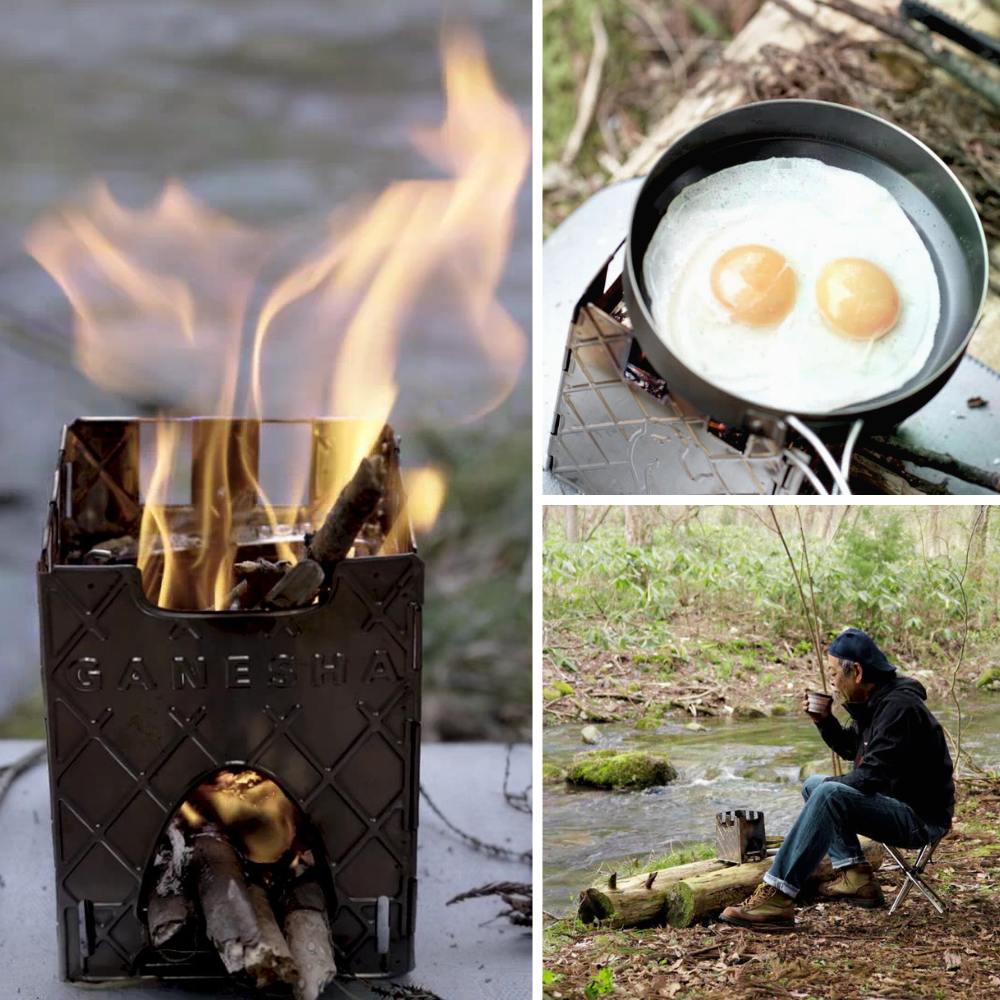
A few screenshots from Shinya’s videos. He makes all of us want to get outdoors more often.
A Ganesha Stove Makes a Great Christmas Present
Now that it’s October, Christmas is right around the corner. If you are considering getting a stove for someone in your life, now is the time to order it. Be sure to use your 10% subscriber discount with the code DISPATCH10.
Share Your Fire - #GaneshaStove
Have you taken your stove somewhere worth seeing? We feature reader photos in every issue. Tag us with #GaneshaStove on social media, or reply to this email with a photo and two sentences about where you were and what you were up to.
Click here to reply now: #GaneshaStove
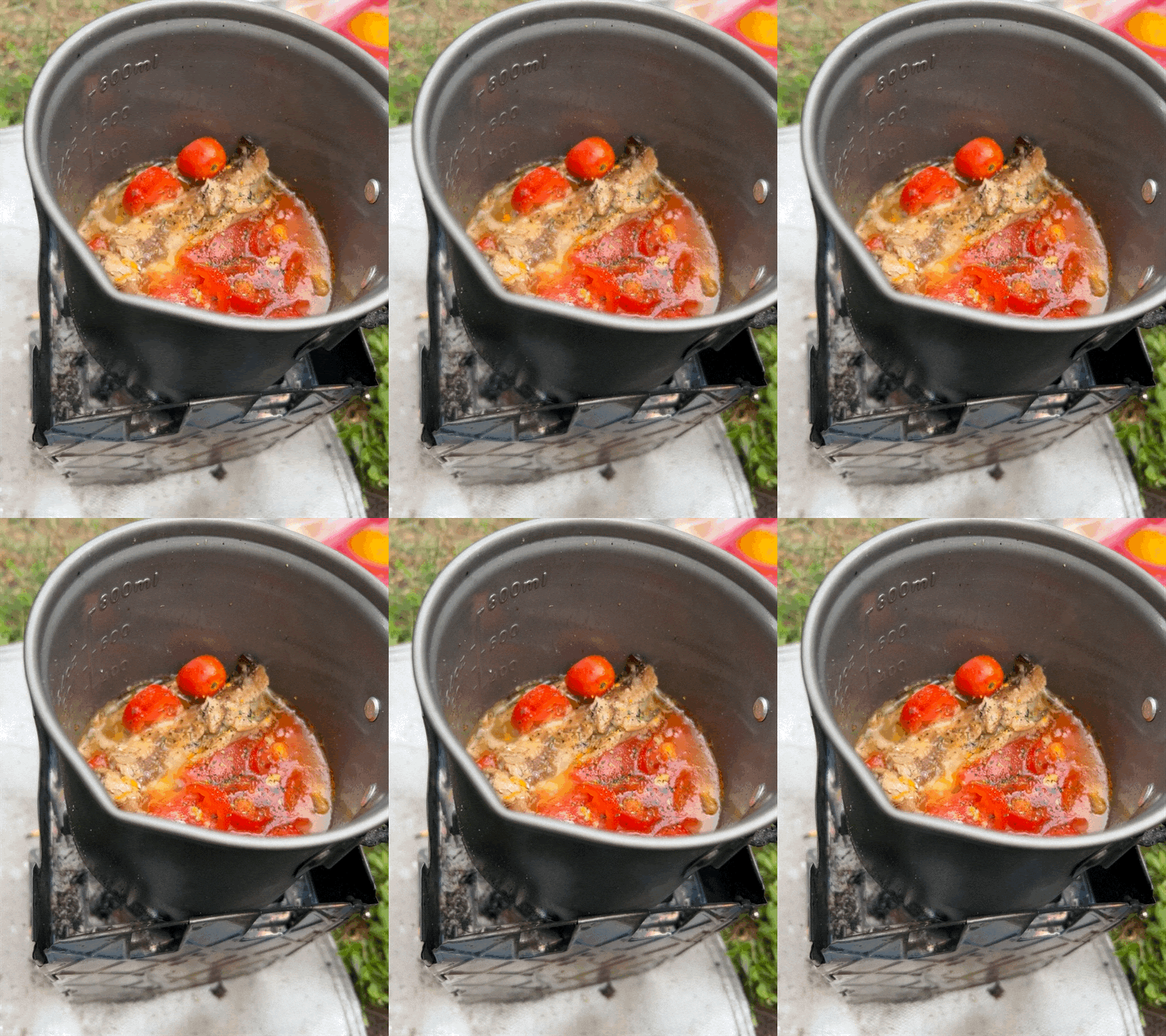
Subscriber David Huggins, sauteeing some garlic and tomato with sardines for a Mediterranean pasta
What to Read
Alone: The Classic Polar Adventure, by Admiral Richard E. Byrd
This book starts with a crazy idea. Sink a plywood cabin into the Antarctic snows, and then live in it alone through an entire winter - six months in temperatures of -60 F and below. In 1934, Byrd stocked the cabin, stored enough heating oil to keep his little stove going all winter long, and climbed down in. Every day, he made weather measurements and marveled at the stars. But the most interesting part is that, several months in, he thought he was going insane. He finally figured out that his oil stove was leaking and giving him carbon monoxide poisoning. He lived to tell the tale, and it’s a great one.
"Nothing can exceed the quiet splendor and freshness,
The fresh scent, the peace, the naturalness all around me,
In the large unconscious scenery of my land with its lakes and forests.
Kindling a fire, falling asleep on the gather’d leaves with my dog by my side,
I sleep—I sleep long—and over the past, oblivion.”
— Walt Whitman, excerpt from The Poet in Nature
More info at ganeshastove.com. Use code DISPATCH10 for 10% off.
The Perfect Campsite
The Perfect Campsite / Story Behind the Name / Kent Survival
I’ve camped in hundreds, maybe thousands of places. Were any of them perfect? Time on the trail gives you time to think about these questions, even if there’s no perfect answer. That said, I think I can name some of the key elements:
Privacy. It’s nice to feel like you are the only person out there in the peace and quiet.
A great view. I am lucky enough to live in the mountains, so I want to see them, dangit! It’s incredible to watch the light on the peaks change, and see the stars wheel overhead.
A small stream. The soft sound of running water is incredible, and it’s nice to not have to haul water.
Trees nearby, or even a big one overhead (on a slope, with a view of course). The weather does often turn, and trees can provide some protection. Plus they provide fuel for my Ganesha stove.
There are a few other things to consider, like bugs. If the mosquitos or gnats are bad, a breezy ridgetop is going to be better. Heat matters too. I’ll often stop in the shade (a temporary camp, if you will) until the day starts to cool. Then I’ll carry on and see if I can find the most-perfect spot before dark.
What do you think? Did I miss some key elements? How would you define a perfect campsite?
September 2026 · Campsites · The Story Behind the Ganesha Name · Kent Survival
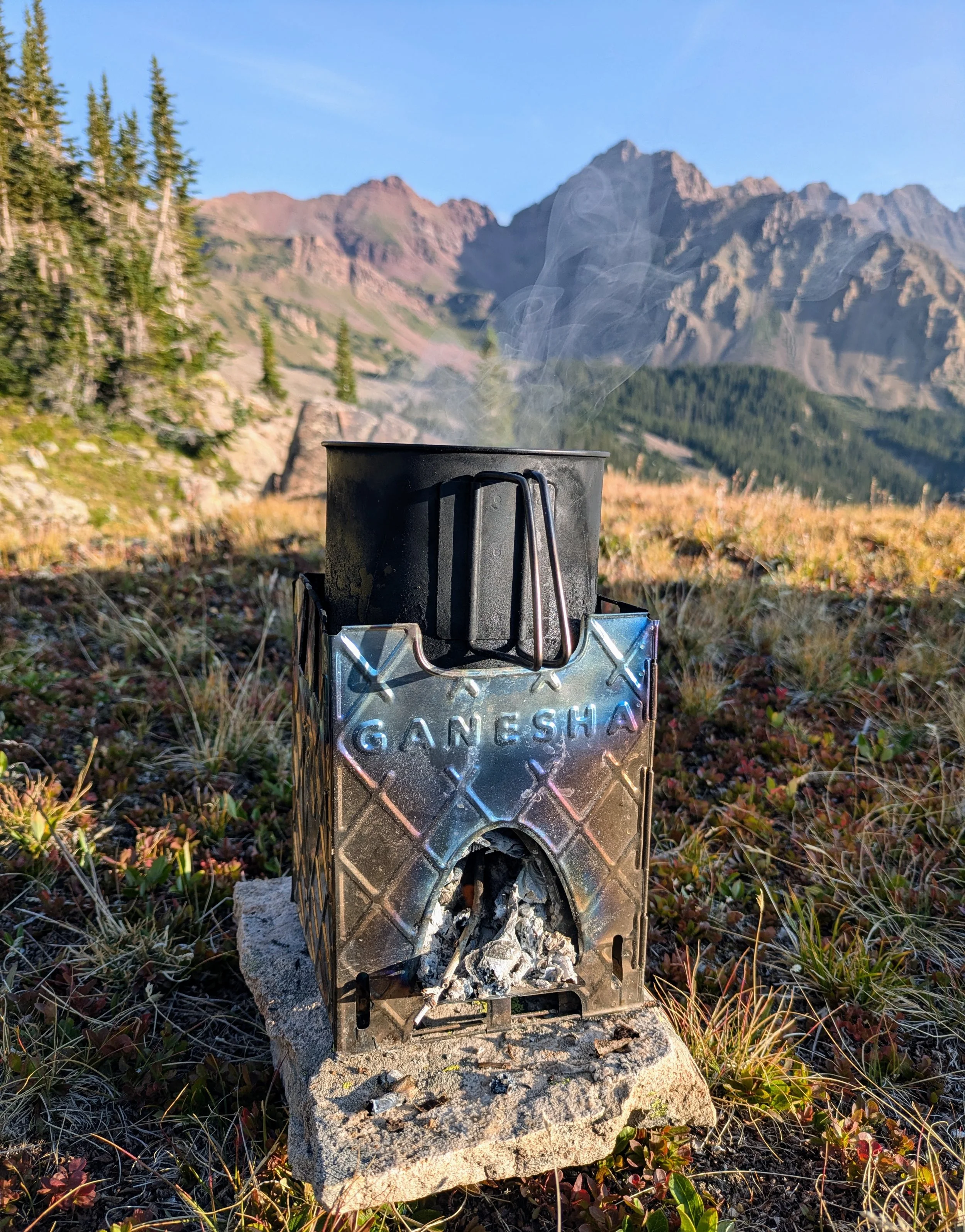
A near-perfect campsite. There’s a small stream about 100 feet away, the views are stupendous, and there are no bugs.
I’ve camped in hundreds, maybe thousands of places. Were any of them perfect? Time on the trail gives you time to think about these questions, even if there’s no perfect answer. That said, I think I can name some of the key elements:
Privacy. It’s nice to feel like you are the only person out there in the peace and quiet.
A great view. I am lucky enough to live in the mountains, so I want to see them, dangit! It’s incredible to watch the light on the peaks change, and see the stars wheel overhead.
A small stream. The soft sound of running water is incredible, and it’s nice to not have to haul water.
Trees nearby, or even a big one overhead (on a slope, with a view of course). The weather does often turn, and trees can provide some protection. Plus they provide fuel for my Ganesha stove.
There are a few other things to consider, like bugs. If the mosquitos or gnats are bad, a breezy ridgetop is going to be better. Heat matters too. I’ll often stop in the shade (a temporary camp, if you will) until the day starts to cool. Then I’ll carry on and see if I can find the most-perfect spot before dark.
What do you think? Did I miss some key elements? How would you define a perfect campsite?
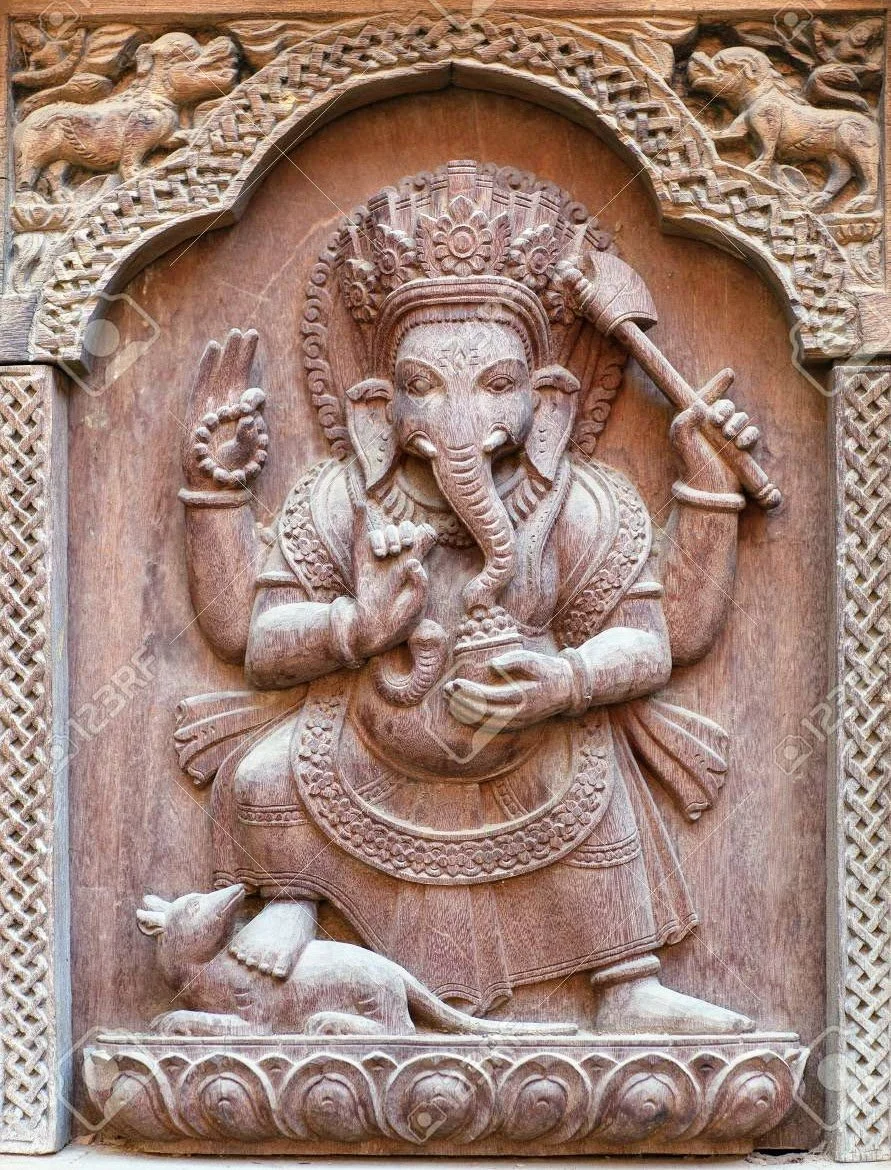
Ganesha carved into a door in Nepal. The bowl he’s holding is full of candies, since he’s got a wicked sweet tooth.
The Story Behind the Name “Ganesha”
It’s been called a “silly name” that customers would have trouble remembering. So what gives? Well, the Ganesha Cookstove Project is a humanitarian organization with the mission of providing clean-burning wood stoves to villagers in Nepal and India. And one of the most recognizable names in that part of the world is Ganesha, the elephant-headed Hindu god of welcome. Throughout South Asia, you’ll see a Ganesha figure on almost every door, and prominently displayed in every public space. For those populations, no word is more memorable than “Ganesha.”
Selling stoves to Westerners is one of the ways we support the Project - all profits go towards stoves for Nepali and Indian villagers.
Influencer Spotlight: Andy Davidson of Kent Survival
Can you make a living off slow-paced, long videos from the woods of England? Andy Davidson certainly has. With nearly a million subscribers on YouTube and weekly hour-long videos, he’s found a way to provide an alternative to modern do-it-quick frenzy. Andy was kind enough to review the Ganesha stove back when it was still a Kickstarter project, and used it in three of his videos. His videos take you into a life of beautiful woods and unhurried enjoyment, with frequent stops for contemplating life with a hot beverage in hand. You can watch his videos with the Ganesha stove here: 1 2 3
“Uber efficient and quick. It's good to have in my arsenal if I wanted to go really really light.” - Andy Davidson
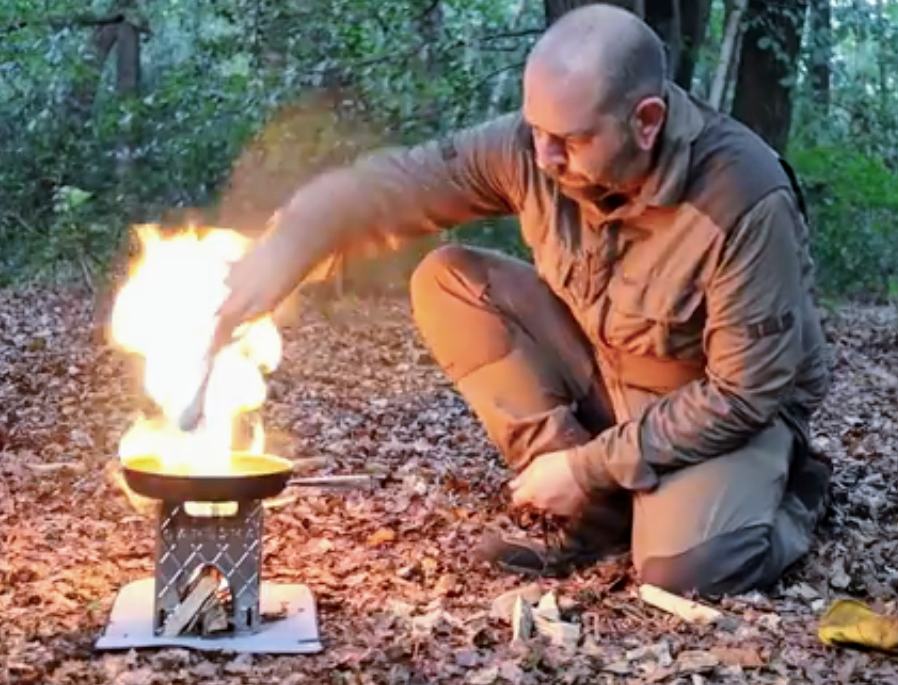
Andy likes fire. And bacon.
Tech Focus: No “Black Hands”
I may have tried more twig stove designs than most people. One common but unpleasant thing about most designs is that your hands get covered in soot, either assembling or disassembling them or both. So when I was designing the Ganesha stove, I wanted a way to avoid the “black hands” curse. By creating a folding stove that doesn’t need to be assembled - just popped open and closed like a book - I was able to keep any soot on the inside, where you never have to touch it. Even better, the groundcloth wraps around the stove and snaps shut. That way, any ash or soot on the groundcloth also stays on the inside. And finally, I include a Tyvek envelope with each stove, so you can be sure your pack stays clean. The Tyvek is also nice and slippery, so it’s easy to slide the closed-up package into your backpack.
Share Your Fire - #GaneshaStove
Have you taken your stove somewhere worth seeing? We feature reader photos in every issue. Tag us with #GaneshaStove on social media, or reply to this email with a photo and two sentences about where you were and what you were up to.
Click here to reply now: #GaneshaStove
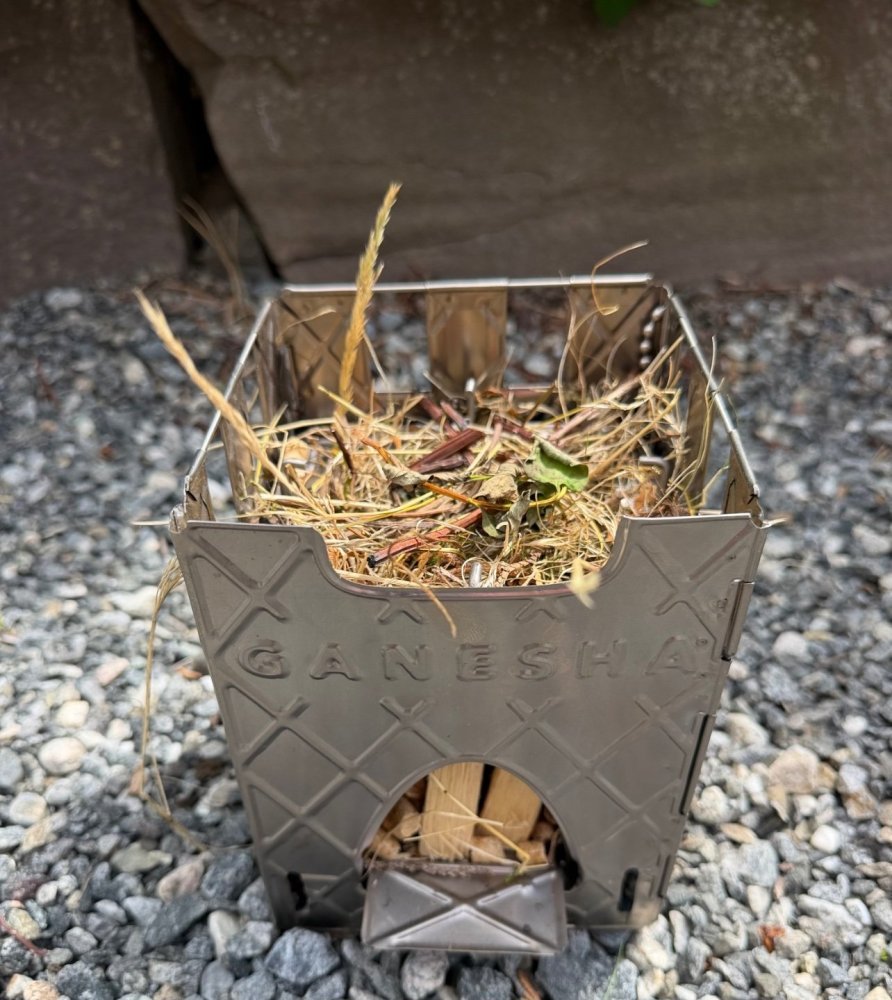
Thanks to subscriber Bjorn Simonson for this month’s photo, from Norway.
What to Read
Wind, Sand and Stars by Antoine de Saint-Exupéry. This delightful book, first published in 1939, tells the story of Saint-Exupéry’s years delivering mail by small airplane for Aéropostale, flying across the Sahara Desert, the Andes mountains, and the skies of Europe. Most harrowing is the account of crashing in the Libyan desert with his mechanic, and how they were able to survive.
"The glories of a mountain campfire are far greater than any may guess."
— John Muir, from his private journal
More info at ganeshastove.com. Use code DISPATCH10 for 10% off.
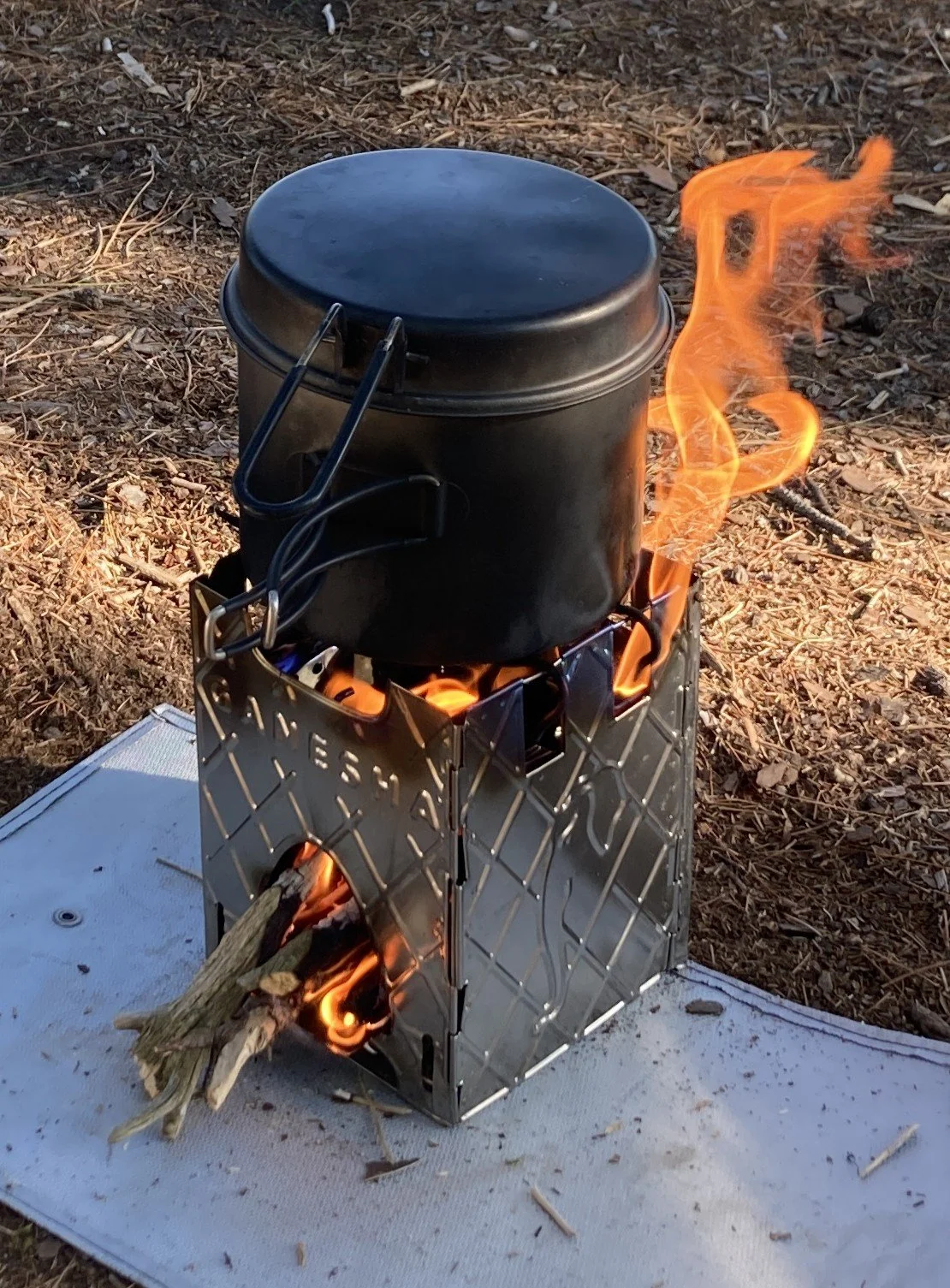
The Many “Right” Ways to Start a Fire
The Many “Right” Ways to Start a Fire
How hard can it be to start a fire? Well, when it’s pouring rain or dumping down snow. It never helps that you might be exhausted, cold and impatient. So it’s worth putting together the things you need for a worst-case scenario, and getting some practice with methods that are super-reliable.
August 2026 · Fire-Starting · PaleoHikerMD · Winterdance
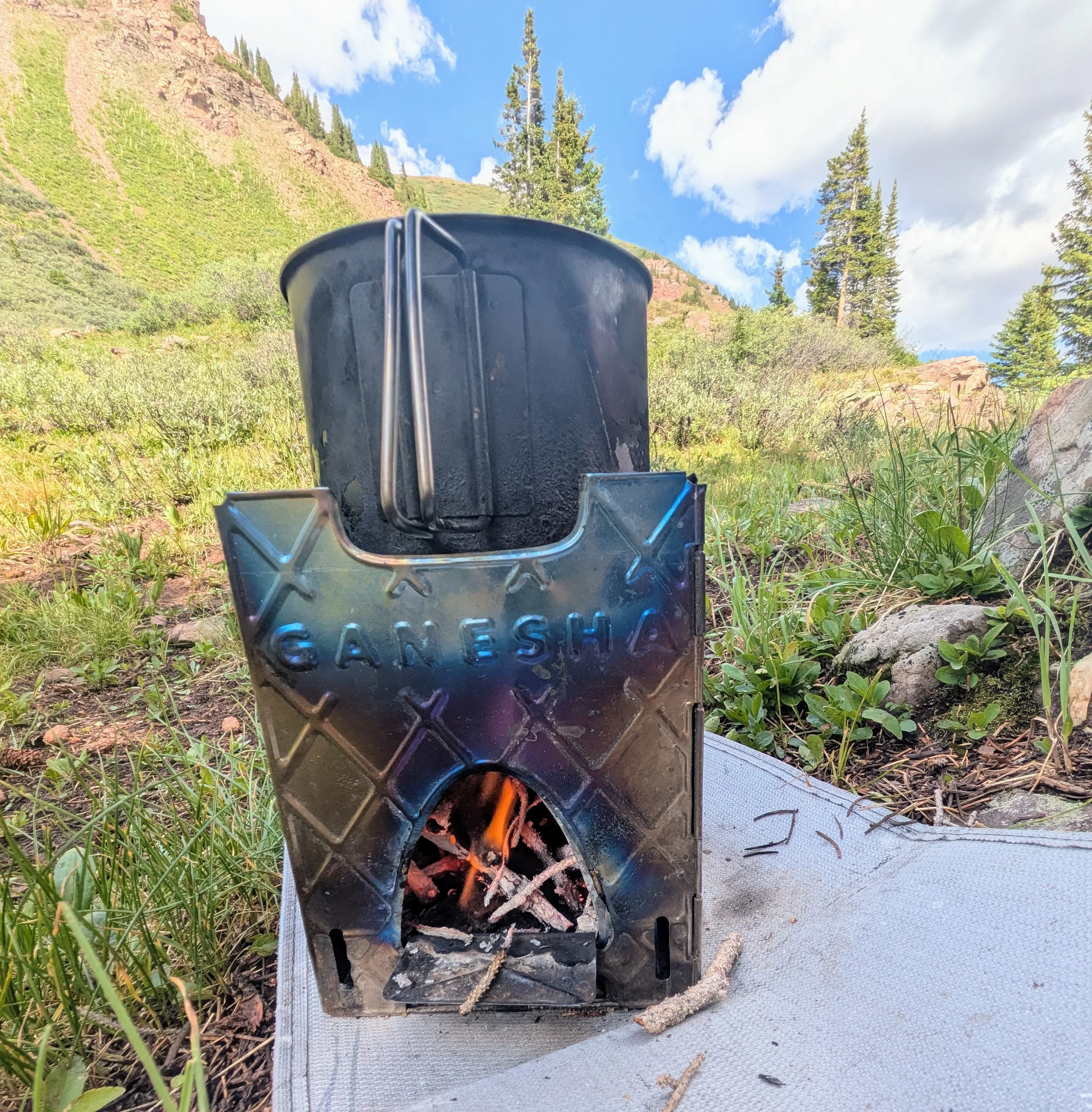
It’s all easy in good conditions (in the West Elk Mountains of Colorado).
How hard can it be to start a fire? Well, when it’s pouring rain or dumping down snow, it gets much harder. It never helps that you might be exhausted, cold and impatient. So it’s worth putting together the things you need for a worst-case scenario, and getting some practice with methods that are super-reliable.
First step: load the stove. You are looking for very dry tinder - grasses, small twigs, the dead parts of shrubs. The ground is usually the wettest place around, even in deserts, so look for fuel that is anywhere from knee height up to over your head. Look under trees, rocks and in other protected places. And while you’re at it, collect a double handful of bigger pieces that you’ll use once you get the fire going.
Load the Ganesha stove with the smallest, driest fuel you’ve got. (Pro tip: corn chips and potato chips burn really well. It’s better to eat them, but do what you need to do.)
Lighting the fire: my favorite method
Have you ever heard of a ferro rod? I hadn’t, either. It’s a miraculous stick of magnesium, and comes with a steel striker. You scrape the striker along the rod, and hot sparks fly off. Not just hot: 4500 degrees F. It works just as well when it’s soaking wet, lasts for several thousand uses, and costs about $15. Here’s a link to the best one.
Suprisingly, you can take a ferro rod through TSA checkpoints, in your carry-on luggage.
So, OK, sparks. It’s a challenge to start a fire with sparks. So I pack some cotton balls rolled in Vaseline. Stretch out the cotton ball to give that spark lots of surface area to hit. I put the cotton in the stove, under the tinder but with plenty still sticking out the front. One or two strikes with the ferro rod and boom, fire. (The cotton balls don’t work quite as well when they are wet, so I keep them in a Ziploc). If you run out of cotton balls, a bundle of dry grass works too.
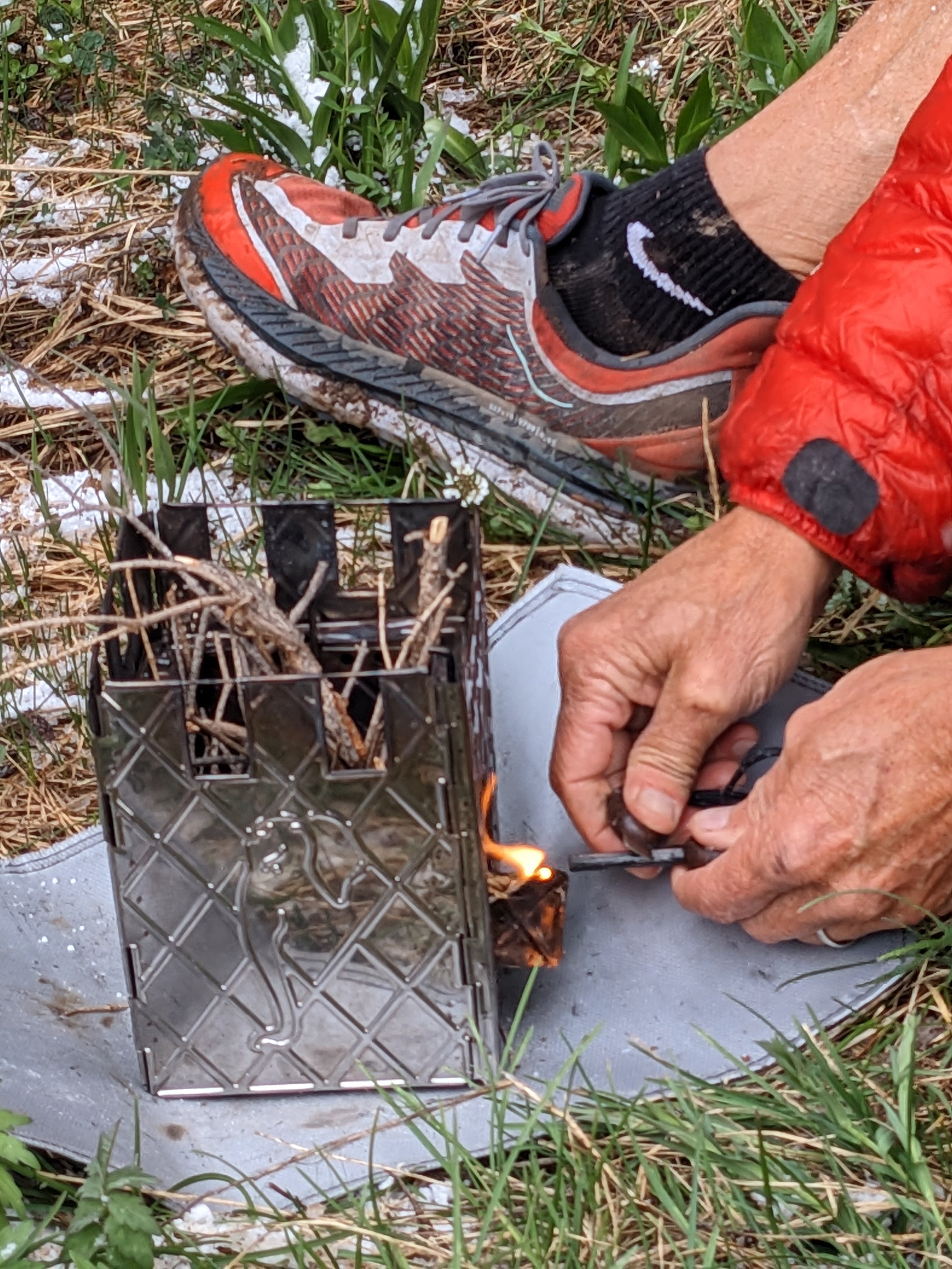
Starting a fire with a ferro rod on a cold and rainy day.
Other ways to start a fire:
Use a lighter or matches. Rain and snow are not your friends with these methods. Waterproof matches do work when it’s wet out, but they can be frustrating.
Fun, but not recommended: a magnifying glass or lens (you can even use a plastic bag filled with water). You’ll need to do it in the middle of the day, with a clear sky and full sun. Or, for the truly dedicated, you can make your own bow drill or one of its variants. I have done this, and it’s very rewarding, but it takes a lot of time and effort to get it right.
Influencer Spotlight: Ernie Garcia aka PaleoHikerMD
Ernie lives in the steamy bayous of Louisiana, and had to wait until the weather was cool enough to try out the Ganesha stove. He is an avid twig stove aficionado, and has tested literally hundreds of stoves. He puts the work into it, and provides detailed, nuanced reviews. He was very impressed by the Ganesha, both its low weight and performance. You can watch his review on YouTube here.
“Crazy lightweight. It fold flats yet it has that gasifier effect”
- PaleoHikerMD
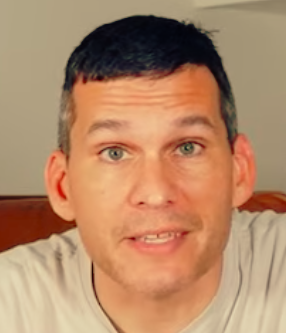
Ernie takes everything seriously.
Share Your Fire - #GaneshaStove
Have you taken your stove somewhere worth seeing? We feature reader photos in every issue. Tag us with #GaneshaStove on social media, or reply to this email with a photo and two sentences about where you were and what you were up to.
Click here to reply now: #GaneshaStove
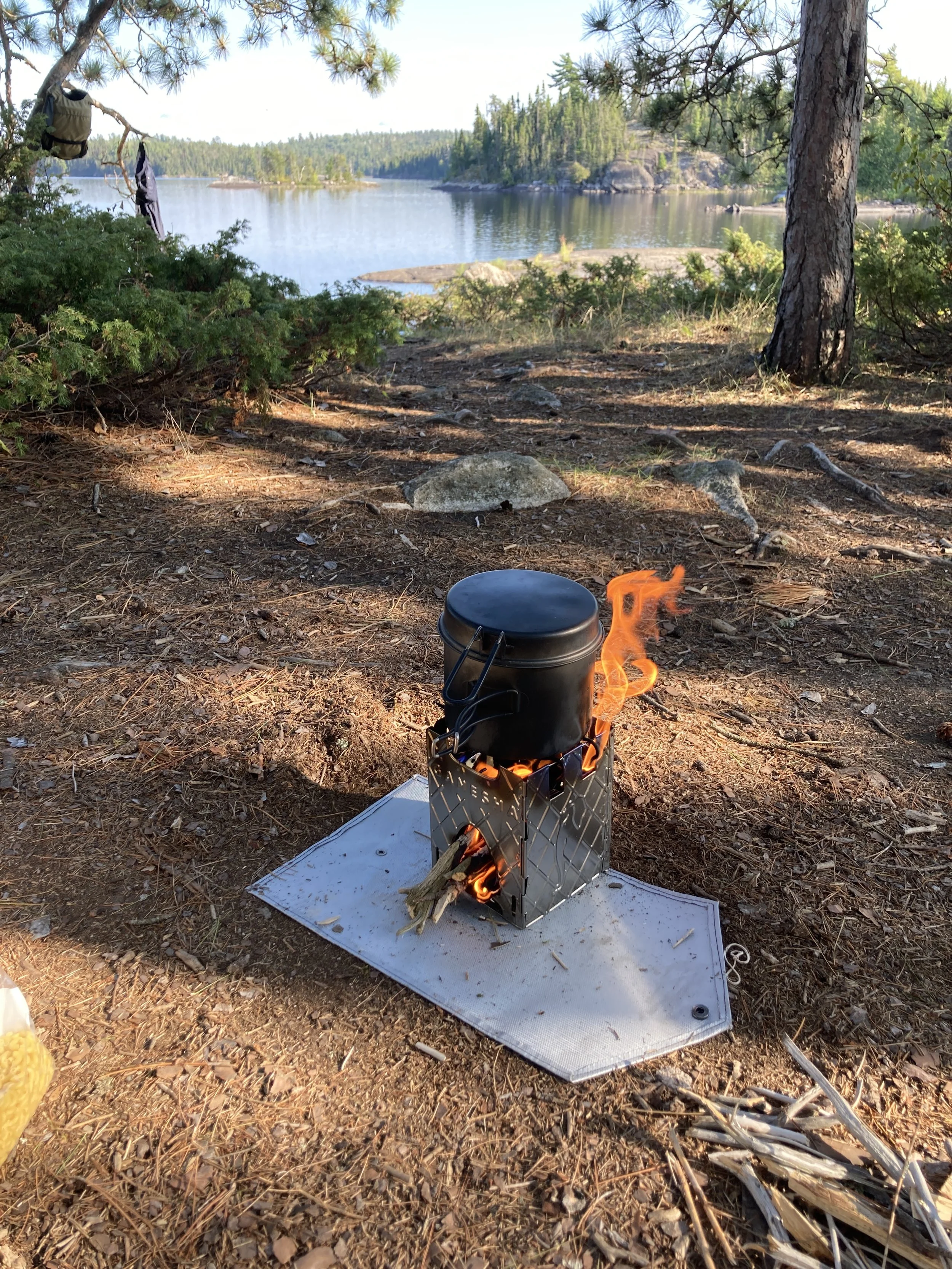
Thanks to subscriber Ralph Neelands for this month’s photo.
“Quetico Provincial Park, in northwestern Ontario, Canada. September 2025. Russell Lake. My pot was too large to fit inside, but two titanium tent stakes set across the top easily solved that problem.”
What to Read
Winterdance, the Fine Madness of Running the Iditarod, by Gary Paulsen. Known for incredible young-adult books like Hatchet, Paulsen decides one day that he wants to run the Iditarod. He knows nothing, has no dogs, has never seen the race. But that doesn’t stop him, and it’s an incredible (and very funny) story.
A long but revealing quote from the book:
“Do you like the race so far?’
I looked at her, trying to find sarcasm, but she was serious; she really wanted to know. And I thought of how to answer her.
I had gotten lost, been run over by a moose, watched a dog get killed, seen a man cry, dragged over a third of the teams off on the wrong trail, and been absolutely hammered by beauty while all this was happening. (It was, I would find later, essentially a normal Iditarod day — perhaps a bit calmer than most.) I opened my mouth.
‘I …’
Nothing came. She patted my arm and nodded. ‘I understand. It’s so early in the race. There’ll be more later to talk about …’
And she left me before I could tell her that I thought my whole life had changed, that my basic understanding of values had changed, that I wasn’t sure if I would ever recover, that I had seen god and he was a dog-man and that nothing, ever, would be the same for me again, and it was only the first true checkpoint of the race.
I had come just one hundred miles.”
More info at ganeshastove.com. Use code DISPATCH10 for 10% off.
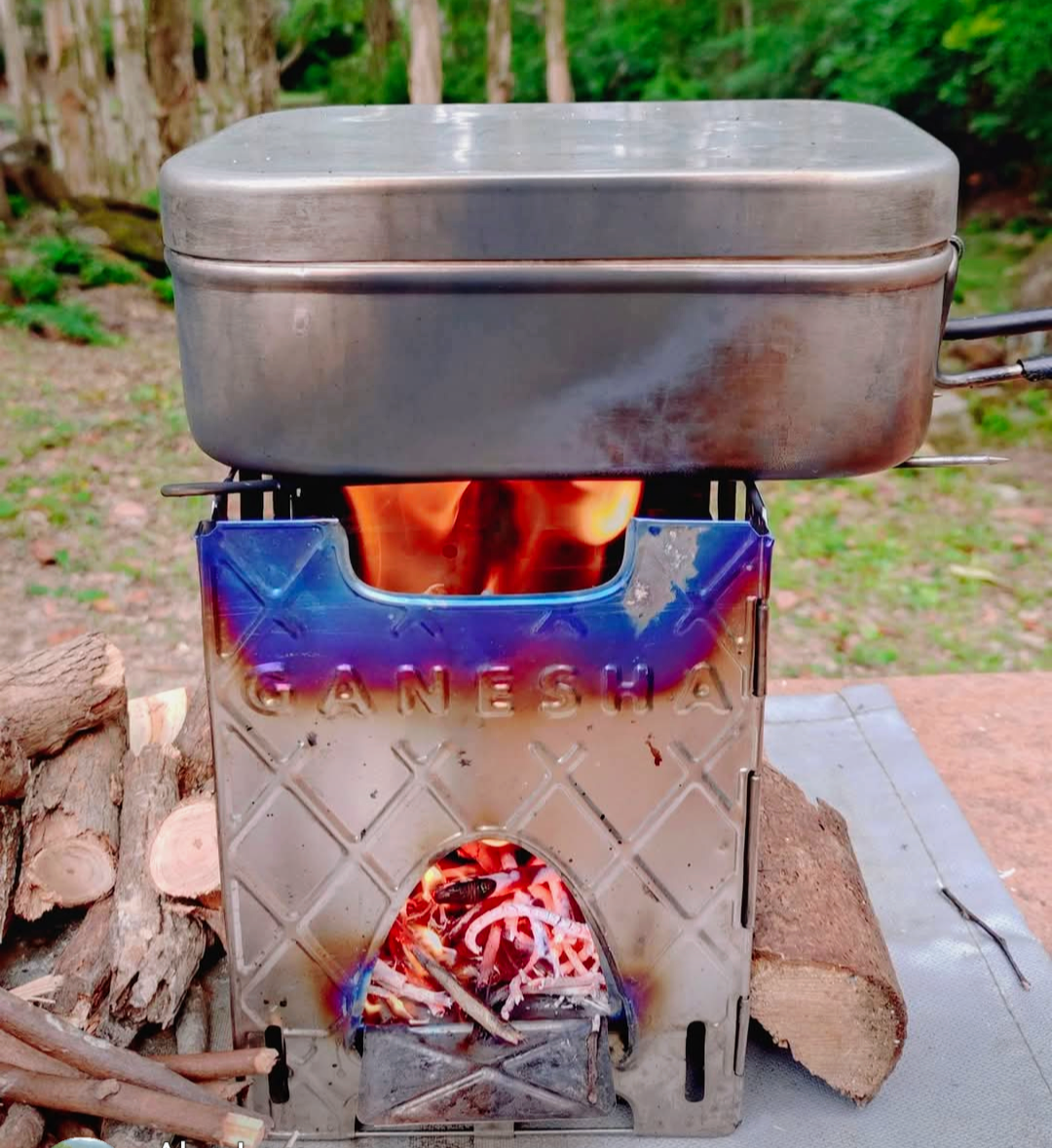
Fire Safety - Your Ganesha Stove is Made For It
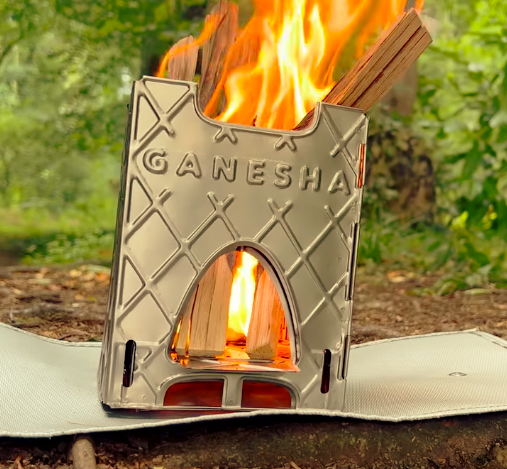
The Ganesha stove was designed with fire safety in mind.
The most prominent fire safety feature of the Ganesha stove is the fireproof ground cloth that comes with every stove. This is a piece of welding fabric (fiberglass coated with silicone on both sides) that sits under the stove, catches embers that fall, and reduces heat transfer to the ground. When not in use, it wraps around the folded stove and keeps any ash and soot on the inside of the package.
Double walls on the Ganesha keep the hot fire inside the stove, and the outside below fuel ignition temperature (it’s still hot, don’t touch!).
July 2026 · Fire Safety · Mike Fountain · Touching the Void
Stove placed properly on the groundcloth.
For better fire safety, I’d keep the firewood away from the stove, but this isn’t bad. (📷 Alex Lam)
Here in Colorado, we’ve entered fire season. At least half a dozen wildfires are burning in western Colorado, and the high mountain valley of Crested Butte is regularly filled with smoke. So, we are all thinking a lot about fire safety.
The Ganesha stove was designed for both safety and performance.
Design Features
The most prominent fire safety feature of the Ganesha stove is the fireproof ground cloth that comes with every stove. This is a piece of welding fabric (fiberglass coated with silicone on both sides) that sits under the stove, catches embers that fall, and reduces heat transfer to the ground. When not in use, it wraps around the folded stove and keeps any ash and soot on the inside of the package.
Double walls on the Ganesha keep the hot fire inside the stove, and the outside below fuel ignition temperature (it’s still too hot to touch).
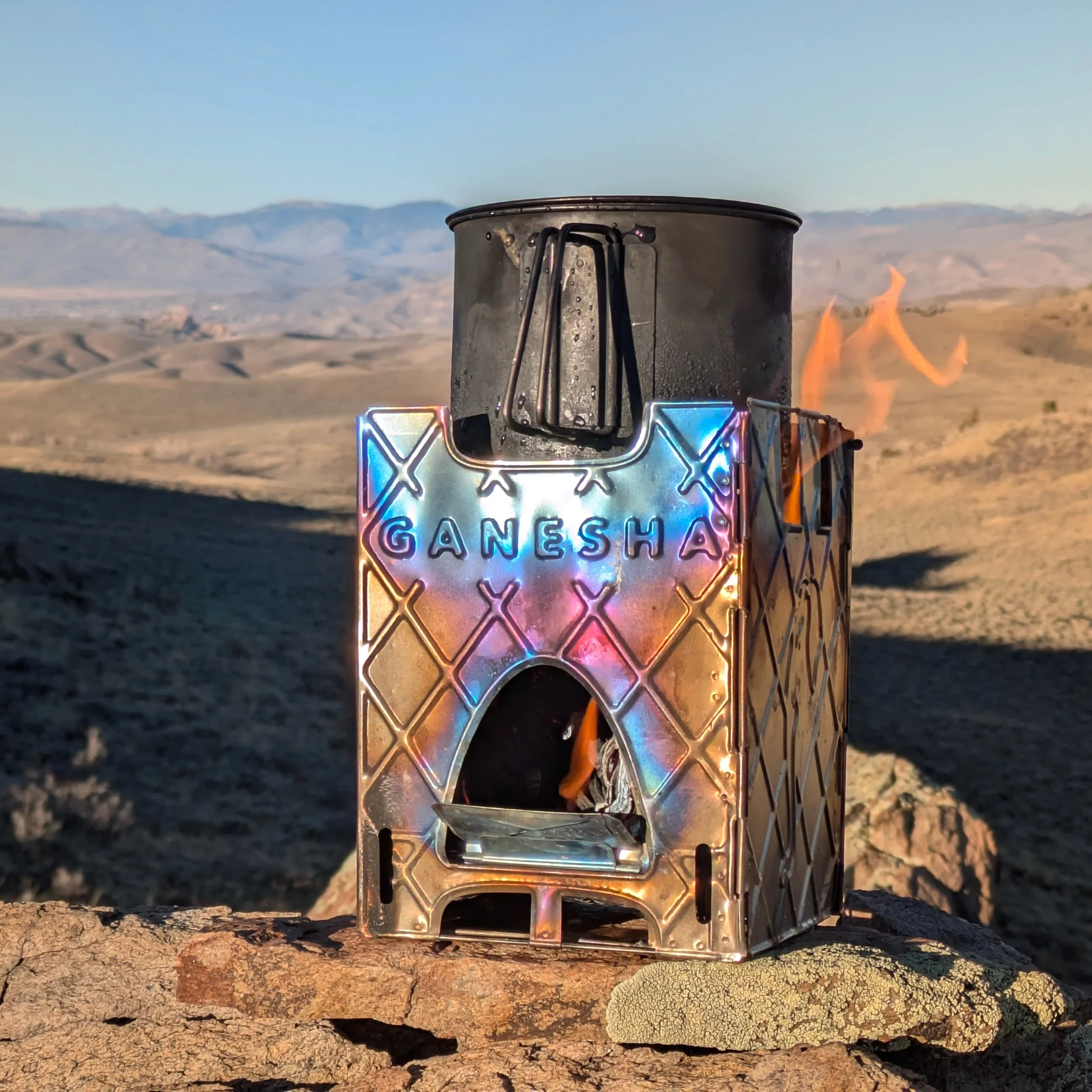
One great thing about solid rock - it doesn’t burn.
How to Do It Right
Pick a good spot to set up the stove. Solid rock, gravel, and moist soil are best.
Clear the area of flammable material. If there’s lots of vegetation and it’s all tinder-dry, keep looking for a better spot. Then clear enough space for the stove and groundcloth, and some space beyond that (the Forest Service recommends clearing out 3 feet).
Keep the fire inside the stove. If you are putting sticks in vertically, make sure they don’t stick out more than an inch or two from the top of the stove. If you are feeding sticks in the front, make sure the sticks are on the groundcloth.
Pay attention to where any sparks might go, and make sure that area isn’t full of tinder-dry grass.
Save some water to put on the ground once you’re heading out. The groundcloth reduces heat transfer to the soil, but it doesn’t stop it completely. Better yet, dig a hole for your ash right where the stove was sitting, dump in the ashes, and drench it with water.
If you are deeply worried about starting a forest fire, look for 2 kinds of spots: first, a gravelly island in the middle of a stream. Simply next to a stream on wet ground is a good alternative. Second, a talus field of rock, or a vegetation-free spot just upwind of a talus field.
Don’t Ignore Fire Bans
Even if you think you can operate your Ganesha stove safely, please heed fire bans. The risk simply isn’t worth it.
Influencer Spotlight: Mike Fountain of Walk, Talk, Brew
Mike Fountain is a coach and YouTuber based in Northern Ireland who doesn’t just like fires - he believes they have a transformative, almost magical effect on people. He leads small-group trips into the forest to revel in nature, build fires, and shrug off the stress of normal life.
Mike reviewed the Ganesha stove over several videos, and ran a comparison test with the BushBox (the similar FireBox is more common in the US). The Ganesha came out on top on every metric. You can watch them on YouTube here and here.
“Uber efficient and quick. I love what this thing does with a twig fire.”
— Mike Fountain, Walk Talk Brew
Mike followed good fire safety protocol!
Share Your Fire - #GaneshaStove
Have you taken your stove somewhere worth seeing? We feature reader photos in every issue. Tag us with #GaneshaStove on social media, or reply to this email with a photo and two sentences about where you were and what you were up to.
Click here to reply now: #GaneshaStove
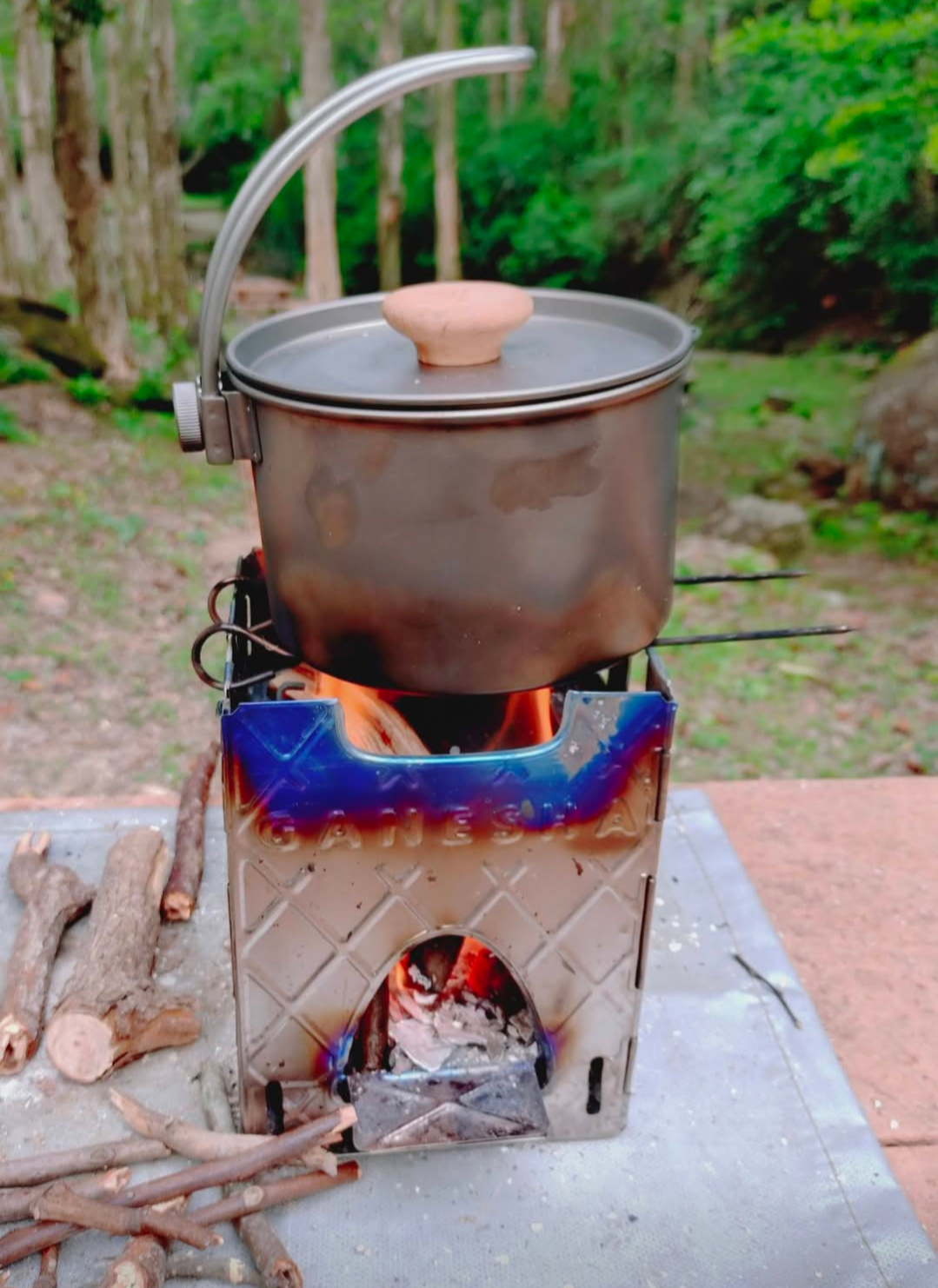
Thanks to subscriber Alex Lam for this month’s photo.
What to Read
Touching the Void by Joe Simpson. This is the story of two men climbing a peak in the Peruvian Andes. They make the peak, but the author breaks his leg on the descent. His partner sleds him down the mountain but, in blizzard conditions, he loses control. Suddenly, Joe plummets into a crevasse. His partner can’t pull him out, and is forced to cut the rope. I won’t ruin it for you, but it’s not a tragedy - Joe lives to tell his tale, and does it exceptionally well.
Joe put this quote at the front of his book, and it’s one of my favorites:
"All men dream: but not equally. Those who dream by night in the dusty recesses of their minds, wake in the day to find that it was vanity: but the dreamers of the day are dangerous men, for they may act their dream with open eyes, to make it possible." - T.E. Lawrence, Seven Pillars of Wisdom
More info at ganeshastove.com. Use code DISPATCH10 for 10% off.
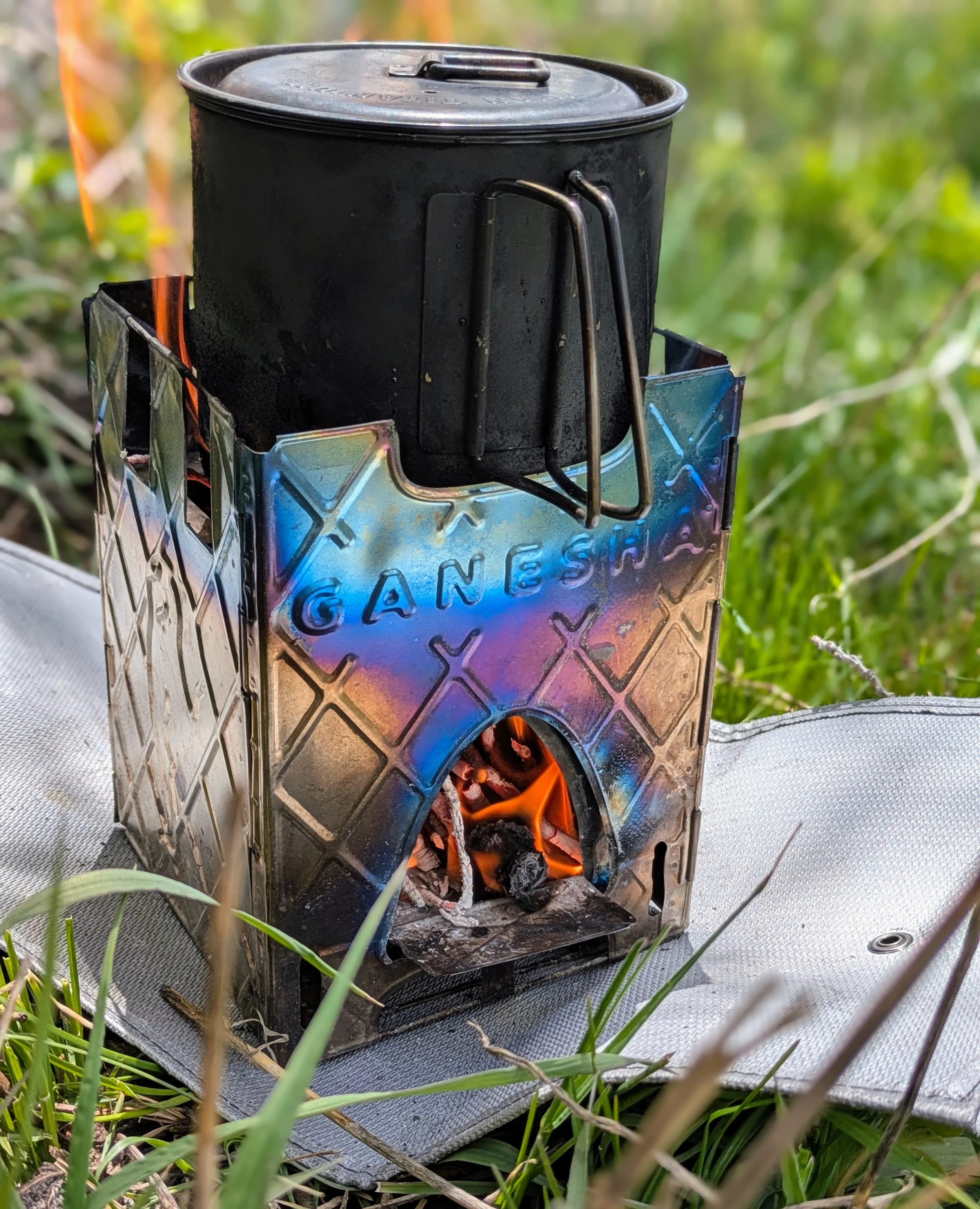
How to Find Dry Firewood
One of the first questions people ask about the Ganesha stove is, Can you always find dry wood for the stove? Having spent years using only this stove for backcountry cooking, I no longer have any anxiety about finding fuel. Not only can I find dry wood, but I can get the stove cranking in just a few minutes. Here are all my insider secrets!
June 2026 · Dry Firewood · Prepared Wanderer · West With the Night
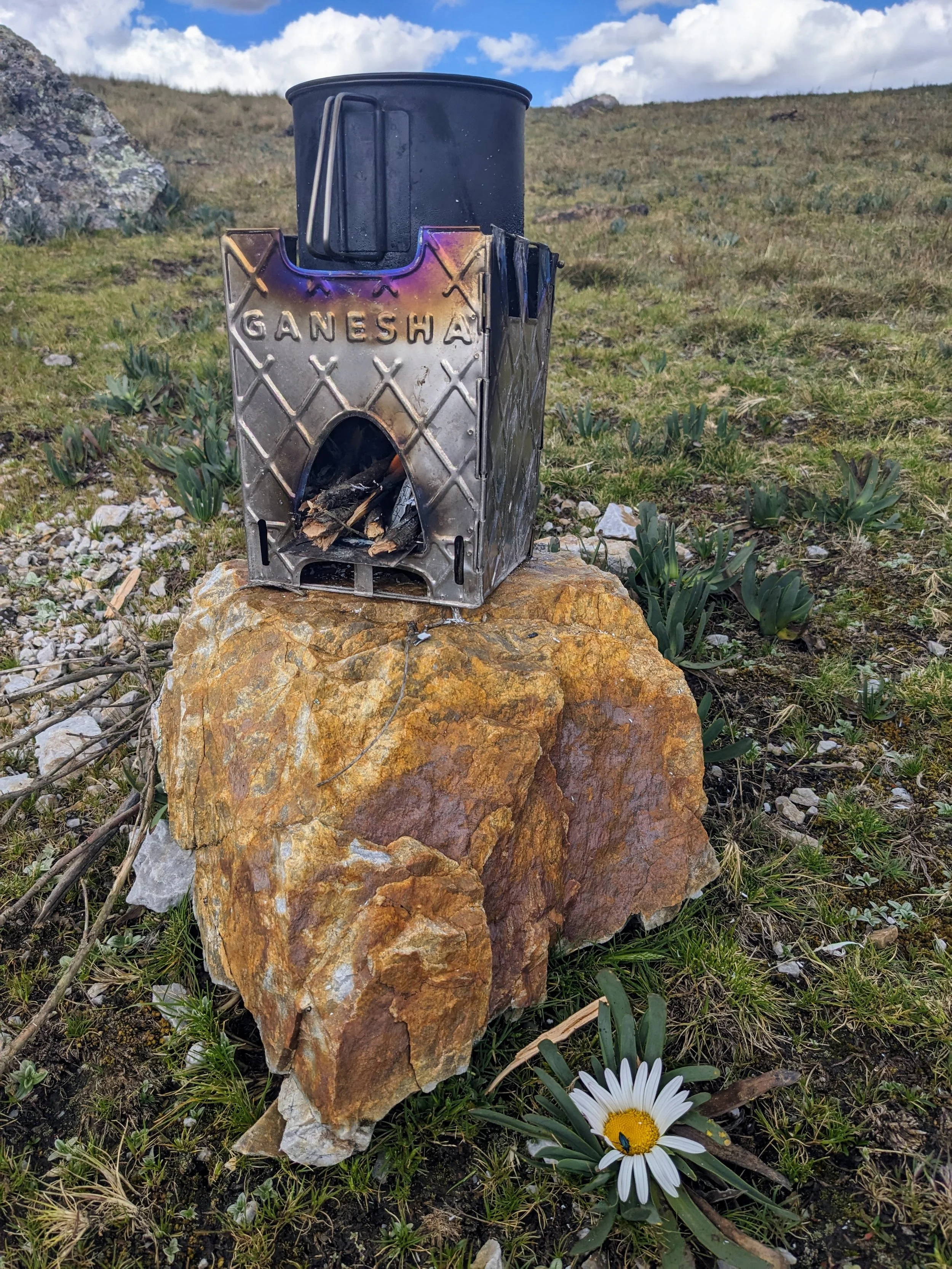
A nice rock and a breeze can be your friends.
I put the stove on this rock to catch a steady breeze, keeping the fire hot so I could burn damp wood. The wood itself (willow twigs) was collected on the way to this primo spot.
One of the first questions people ask about the Ganesha stove is, “can you always find dry wood for the stove?” Having spent years using only the Ganesha stove for backcountry cooking, I no longer have any anxiety about finding fuel. Not only can I find dry wood, but I can get the stove cranking in just a few minutes. Here are all my insider secrets!
Dry Conditions
This is the easiest situation, when you are in a spot with dry twigs up in the trees and on nearby shrubs. I find a good spot to set up, based mostly on whether I want sun or shade, and with the best view. I collect wood for a few minutes. You don’t need much: a double handful is plenty to boil water for several cups of your favorite hot beverage. For cooking food, maybe twice as much.
In western Colorado, almost every species of tree or shrub provides good fuel: conifers, aspens, cottonwoods, sagebrush, willow, and many more. I like pieces that range in diameter from that of my pinky to that of my thumb - call it from a quarter inch to half inch. Pieces up to 1” in diameter work well, but bigger than that and the pieces have so little surface area that they burn very slowly. Throw a handful in the stove, light it and you are good to go.
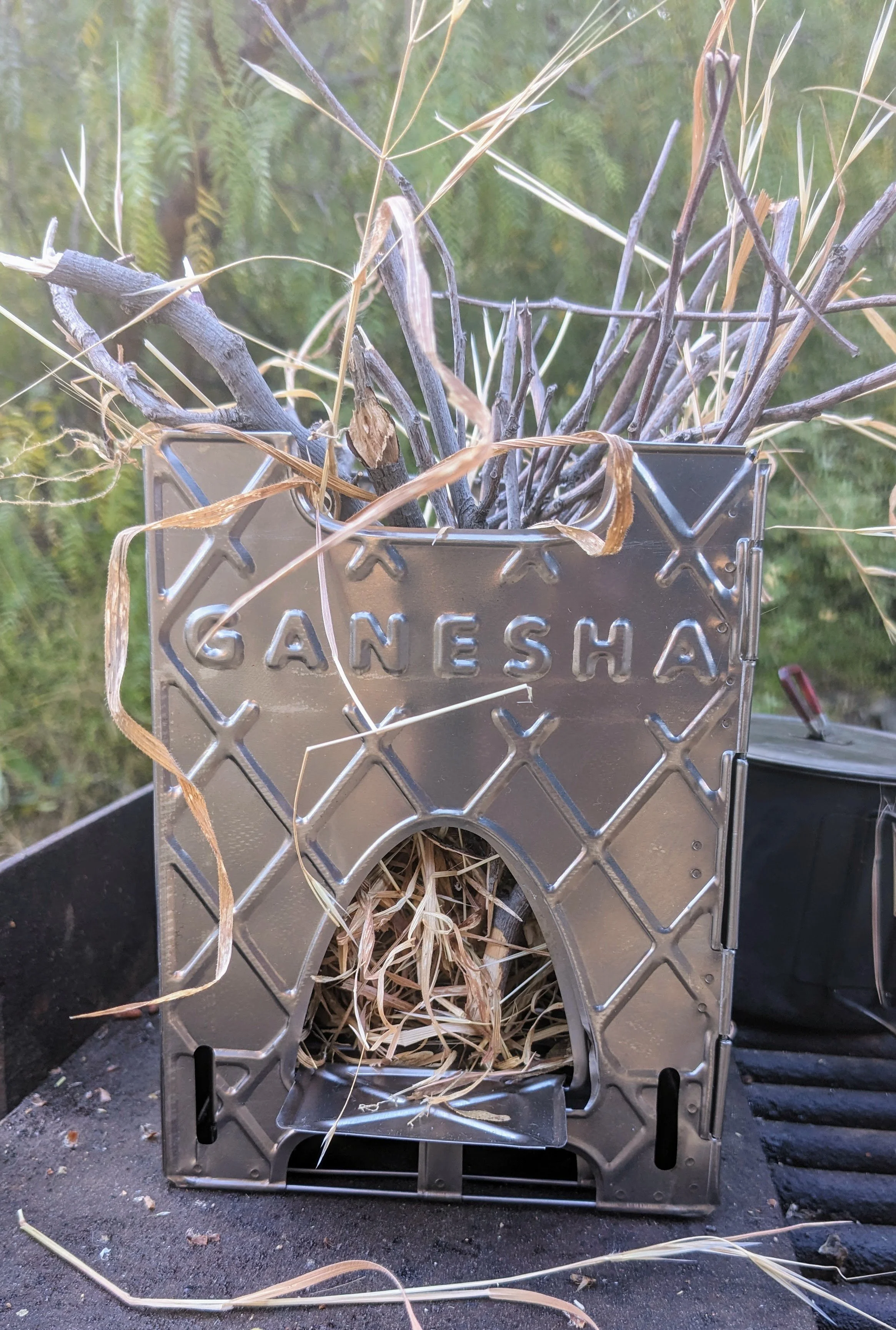
Stove filled with twigs and ready to light
When Wood is Scarce
This is when it’s good to remember that the stove can burn almost any biomass as long as it’s not soaking wet. In this case, I’ll start looking for fuel 10 or 15 minutes before I want to stop. It’s amazing how much fuel you can find, even in a barren landscape. Dung burns too - cow, elk and deer dung all burn well when they are fully dry. And no, it doesn’t smell bad.
It’s Wet, But Not Everything is Drenched
I do 2 things in this case. First, I start looking for fuel steadily as I hike. I’m looking for dry patches on the ground, which means the tree above that patch is keeping everything dry. Then I look for small branches in that dry zone, both up above in the sheltering tree and in shrubs down below. Even if you don’t see dry patches, the driest branches are going to be up against the trunks of the trees. It’s not very hard work to find them and, hey, aren’t you out there to get in touch with nature?
The second thing I do is find a rock that I can put the stove up on, a foot or two off the ground and ideally with a steady breeze. That will provide the extra air the fire needs to burn hot. The hotter the fire burns, the better it can handle damp wood.
Everything is Wet, Wet, Wet
This calls for all of the above, plus a few more tricks. If it’s been dry but pouring rain is imminent, I’ll collect a few handfuls of wood and put them in my pack to stay dry. I’ll also look for pitch balls - these form on the trunks of conifers and burn exceptionally well. I usually keep a few in with my fire starting kit. And finally, I collect wood - even if it’s wet - that is the diameter of a piece of string. These are small, dead shrubs, or the finest branches of conifers, juniper, sage and desert plants. They will burn quickly once ignited, but the important thing is that they will burn even when wet.
One more tool for wet conditions is to pack a few sticks of fatwood. This is pine that, because of its spot in the tree, has absorbed pitch. And because pine and pine pitch both burn exceptionally well, it can make the difference between standing around in the cold and wet vs. sipping hot coffee next to the Ganesha stove.
Many people pack an alcohol stove with a few ounces of fuel. The stove goes inside the Ganesha stove and works OK regardless of conditions. The caveat is that alcohol stoves generate far less heat than a wood fire, so it may take 10-15 minutes to bring a pot of water to a boil.
Up next month: the many different ways to start a fire 🔥
Influencer Spotlight: Wendell Adams, the Prepared Wanderer
Wendell Adams, based in Ohio, does in-depth, real-life reviews on YouTube as the Prepared Wanderer. I love the name - wandering is something I specialize in too, and it’s nice to be prepared. Wendell’s channel runs the gamut from bushcraft skills to how to create the best bug-out bag. He likes practical, budget-friendly gear that works for both beginners and experienced outdoorspeople.
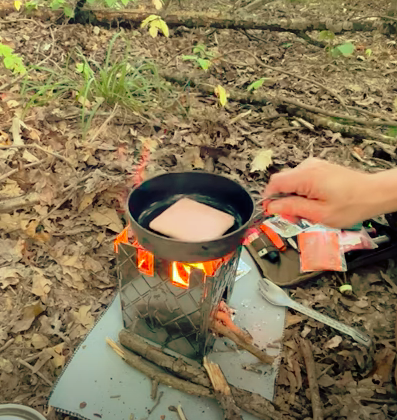
Bushcrafters particularly like cooking Spam, and Wendell is no exception.
Wendell tested the Ganesha in the field, and found it to be an ideal long-term wilderness and bug-out stove. He was won over by its lightweight folding titanium design, the inner insert that doubles as a standalone day-pack stove, and a boil time of under five minutes.
Wendell also compared the Ganesha directly to a similarly sized Firebox stove and found the Firebox to be significantly heavier, even in its titanium version. He gave the edge to the Ganesha for its gasification advantage (cleaner burn, less smoke, less fuel), and for its two-in-one design that lets the inner insert serve as a standalone day-pack stove. You can watch the review on YouTube here.
Share Your Fire - #GaneshaStove
Have you taken your stove somewhere worth seeing? We feature reader photos in every issue. Tag us with #GaneshaStove on social media, or reply to this email with a photo and two sentences about where you were and what you were up to.
Click here to reply now: #GaneshaStove
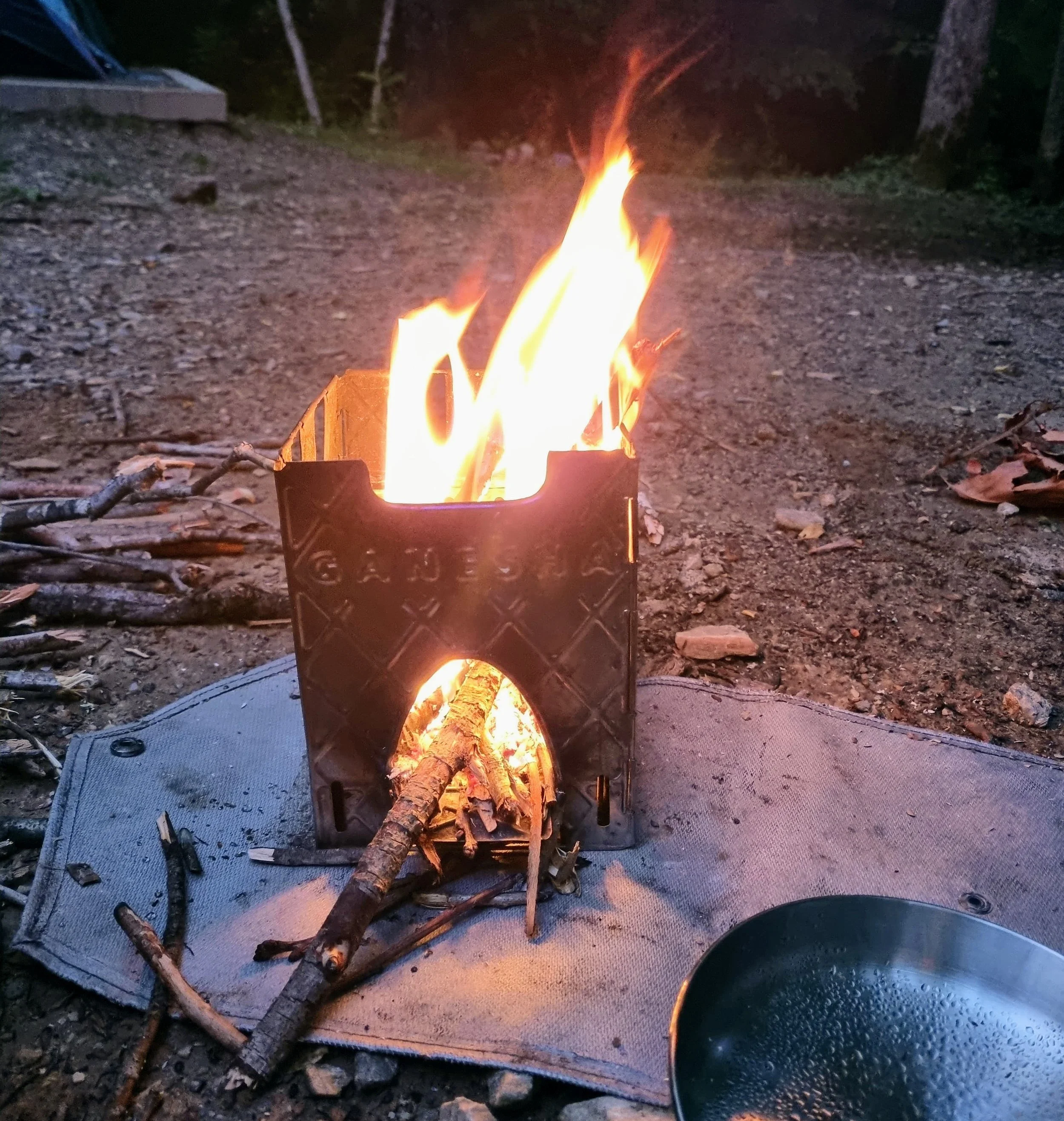
Thanks to subscriber Thaddeus Ward for this month’s photo, taken in the Smoky Mountains of Tennessee
What to Read
West With the Night, by Beryl Markham. This is a magical memoir of Beryl’s days in Kenya (then British East Africa) in the early 1900s. She became an accomplished horsewoman, incredible bush pilot, and made money searching for elephants from a tiny plane. Later, she became the first person to fly nonstop from Europe to America, and the first woman to fly solo east to west across the Atlantic.
“"Never turn back and never believe that an hour you remember is a better hour because it is dead. Passed years seem safe ones, vanquished ones, while the future lives in a cloud, formidable from a distance. The cloud clears as you enter it." -Beryl Markham
More info at ganeshastove.com. Use code DISPATCH10 for 10% off.
Why Your Campfire is so Inefficient
It All Begins Here
May 2026 · May Day Sale · The Science Behind the Stove · Stephen J Reid
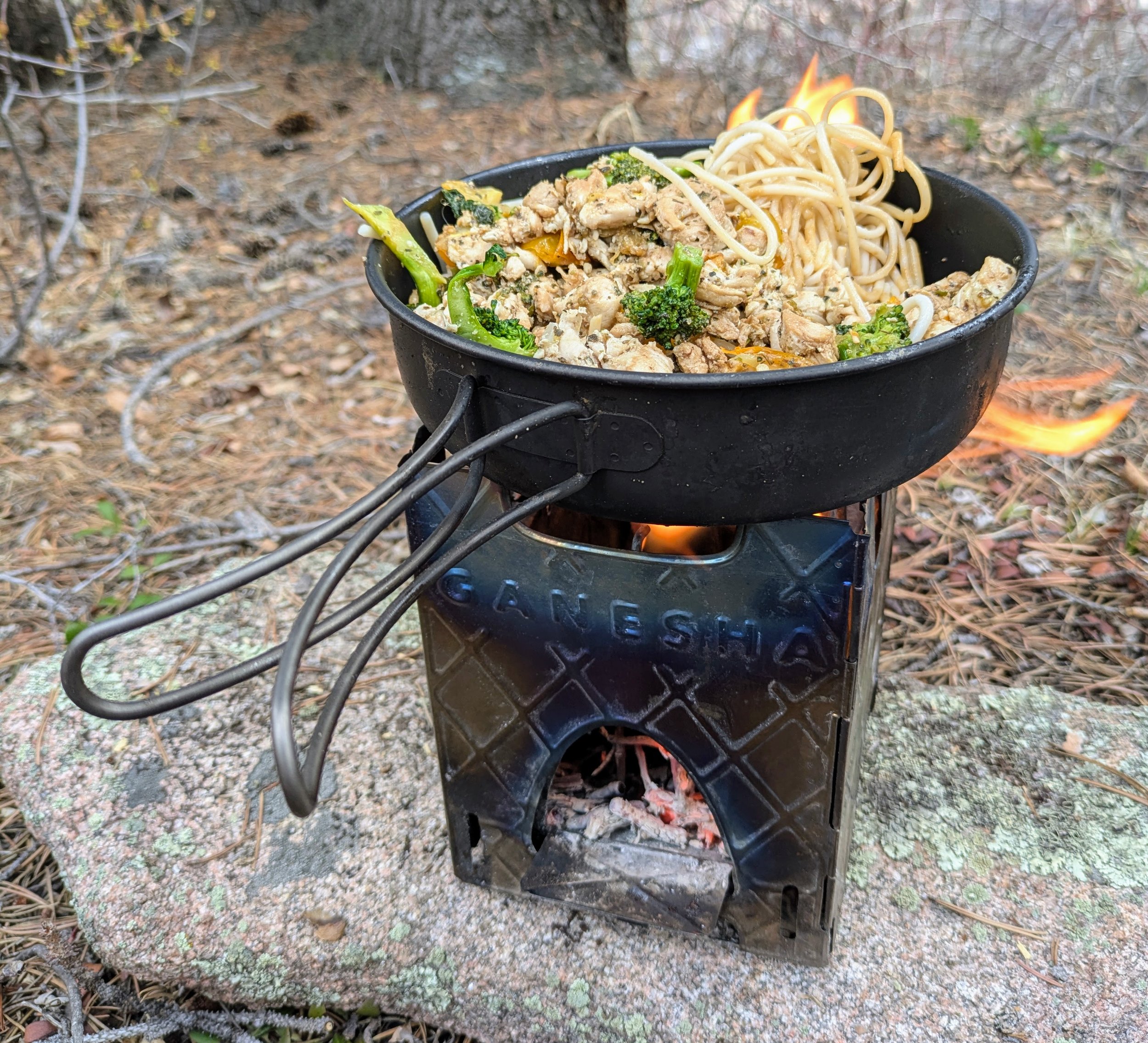
Cooking Thai curry
Finally! Our May Day Sale. Everything at ganeshastove.com is 20% off until May 7. Domestic US shipping is free, and we ship anywhere else in the world for $20 a stove.
In this issue, we share a little bit of the science behind the Ganesha stove, and feature Stephen J Reid, one of our favorite YouTubers.
Why Campfires Smoke and the Ganesha Doesn’t
Part of the process of designing the best possible wood-burning backpacking stove was learning how fires work. One of the surprising things: wood is almost 100% combustible. Smoke is not a waste product of combustion - it will burn, given the right conditions. Smoke is made up of unburned organic gases and carbon particles that the fire generated but lacked the heat or oxygen to ignite. Every wisp of smoke from your campfire is fuel converted to gas, then wasted into the atmosphere. A smoky fire is an inefficient fire.
The key factor is temperature. Wood doesn't burn directly. When heated, it first drives off moisture (thus the hissing and popping), then at 400°F (200°C) begins to chemically decompose through a process called pyrolysis, releasing combustible gases: carbon monoxide, hydrogen, methane, volatile organics. These gases are what actually burns, not the wood itself. The wood becomes charcoal, which will later burn at much higher temperatures. A standard campfire rarely reaches the sustained temperatures needed to combust these gases before they escape. The fire zone is too cool at the edges, too oxygen-variable, too chaotic.
At 900°F (500°C), something fundamental changes. Combustible pyrolysis gases will ignite if they encounter adequate oxygen at this temperature. This is the threshold the Ganesha is engineered to exploit. Its double-wall construction creates a channel between the inner and outer chambers. As the primary fire heats the inner chamber, the air in this channel gets very hot. This superheated secondary air naturally flows upward, and comes in at the top of the combustion zone, right where smoke is forming and trying to escape. The smoke ignites. Instead of a yellow, sooty flame, you get a bright orange flame of near-complete combustion. The hotter the fire gets, the more efficiently it burns; the more efficiently it burns, the hotter it gets.
This is why the Ganesha's performance improves noticeably after the first minute or two. The stove is warming its own walls, preheating its own secondary air, climbing toward sustained gasification temperature. It’s thermochemistry, but it feels like the easiest fire you’ve ever made.
Influencer Spotlight: Stephen J Reid
Stephen J Reid is a Northern Ireland-based filmmaker, outdoor explorer, and YouTuber. His weekly videos include adventure, hiking, trail running, and visits to places like Narnia (or at least, the area where CS Lewis grew up). Half the fun of the videos comes from his wacky, ebullient personality. He cheerily goes on long adventures to cold, wet, and miserable places, and narrates his journeys.
His verdict on the Ganesha was characteristically direct:
“Works a treat. This thing worked quite well and weighs absolutely nothing. I am impressed.”
— Stephen J Reid
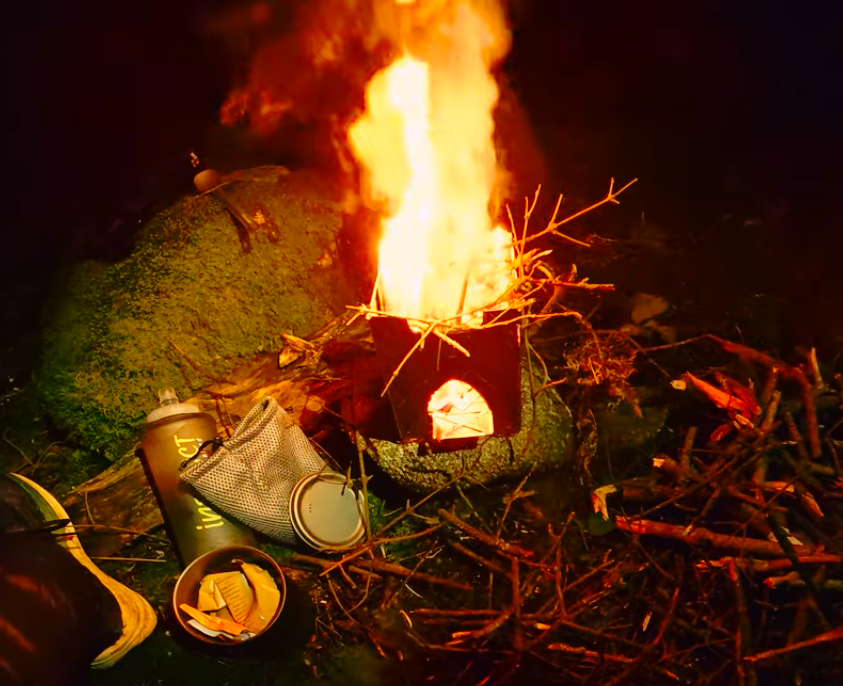
Stephen had no trouble getting a roaring fire going in the Ganesha stove.
The review appeared in his “7kg of Comfort” wild camp load-out video, where it was tested on-trail, not in a studio, in conditions where it actually had to perform. Temps dropped below freezing, Stephen stayed dry and warm, and he had a grand old time. Also, he stopped near the end of his 16-mile backpacking trip to get a burger - not usually a part of my wilderness experiences, but I absolutely approve.
🔥 An Ode to Backcountry Fire
I think most people will agree that there's something special about cooking on a wood fire in the backcountry. It isn't the food (though the food is better) - there is genuine chemistry when you cook over wood, and the smell alone is fantastic. It's something more primal: the sense that you are doing a thing that humans have done, in essentially the same way, for the entirety of human history. Tens of thousands of years of fire-making. Every ancestor you have, going way, way back, gathered around a fire at the end of the day. It’s no wonder we like it.
You find the firewood, and learn more about the landscape while you’re at it. You build the fire, which requires patience and sequence. The reward is a warm, crackling fire and the promise of hot drinks and tasty food. The Ganesha makes this lighter and more efficient. It doesn't make it easier in the sense of removing the engagement. It removes the frustration, so the engagement is all that's left.
Share Your Fire - #GaneshaStove
Have you taken your stove somewhere worth seeing? We feature reader photos in every issue. Tag us with #GaneshaStove on social media, or reply to this email with a photo and two sentences about where you were and what you were up to.
Click here to reply now: #GaneshaStove
Thanks to subscriber Alex Lam for this month’s photo!
What to Read
Endurance by Alfred Lansing - the incredible story of the survival of all the crew of Ernest Shackleton's 1914 Imperial Trans-Antarctic Expedition. The ship was crushed by pack ice and sank. The crew survived on ice for months, made an open-boat crossing of the Southern Ocean, then crossed South Georgia Island's unmapped mountains on foot. The ship's cook, Charles Green, created a “blubber stove” that burned seal and penguin fat. They carried the stove to their ice camps and to Elephant Island, and produced hot meals in conditions that would have broken most people. Perfect for reading next to a fire.
“Our forefathers had civilization inside themselves, the wild outside. We live in the civilization they created, but within us the wilderness still lingers. What they dreamed, we live, and what they lived, we dream.”
— T.K. Whipple, Study Out the Land
More info at ganeshastove.com. Storewide sale 20% off til May 7, but you can always use code DISPATCH10 for 10% off.
Joe Robinet Says It Has a Really Silly Name
It All Begins Here
April 2026 · Joe Robinet · Fire Science · The Why
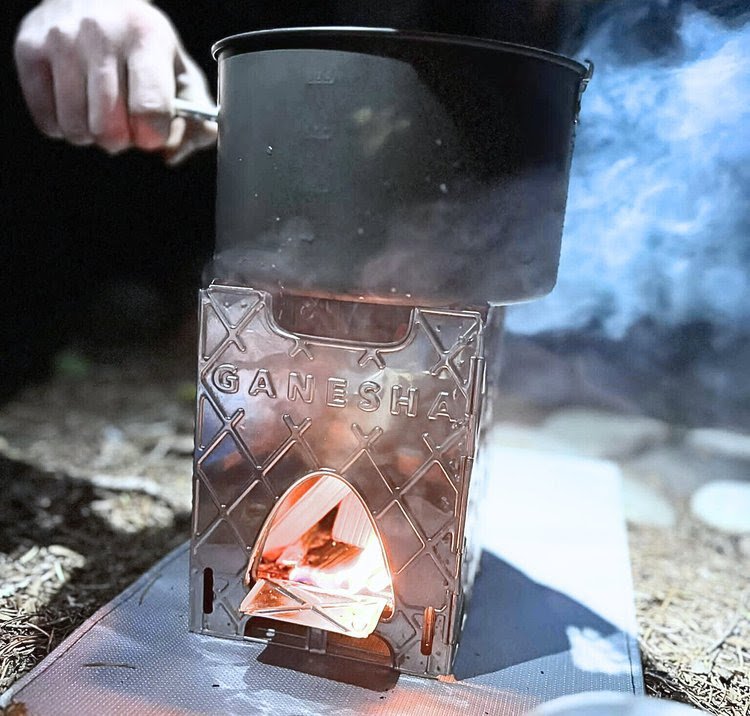
"It has a really silly name and a silly look to it, but I swear to God it works super, super good, extremely efficient."
— Joe Robinet
Influencer Spotlight: Joe Robinet
Joe Robinet: millions of subscribers, real multi-week wilderness canoe expeditions, zero fluff. He reviewed the Ganesha stove in '19 Days Needed' and delivered our favorite quote in the history of this project.
Thanks Joe! Joe is not given to hyperbole. When he says “extremely efficient,” he means it. Ganesha appears at the 17-minute mark, but the whole video is worth watching.
Fire Science: The “Silly Look” Explained
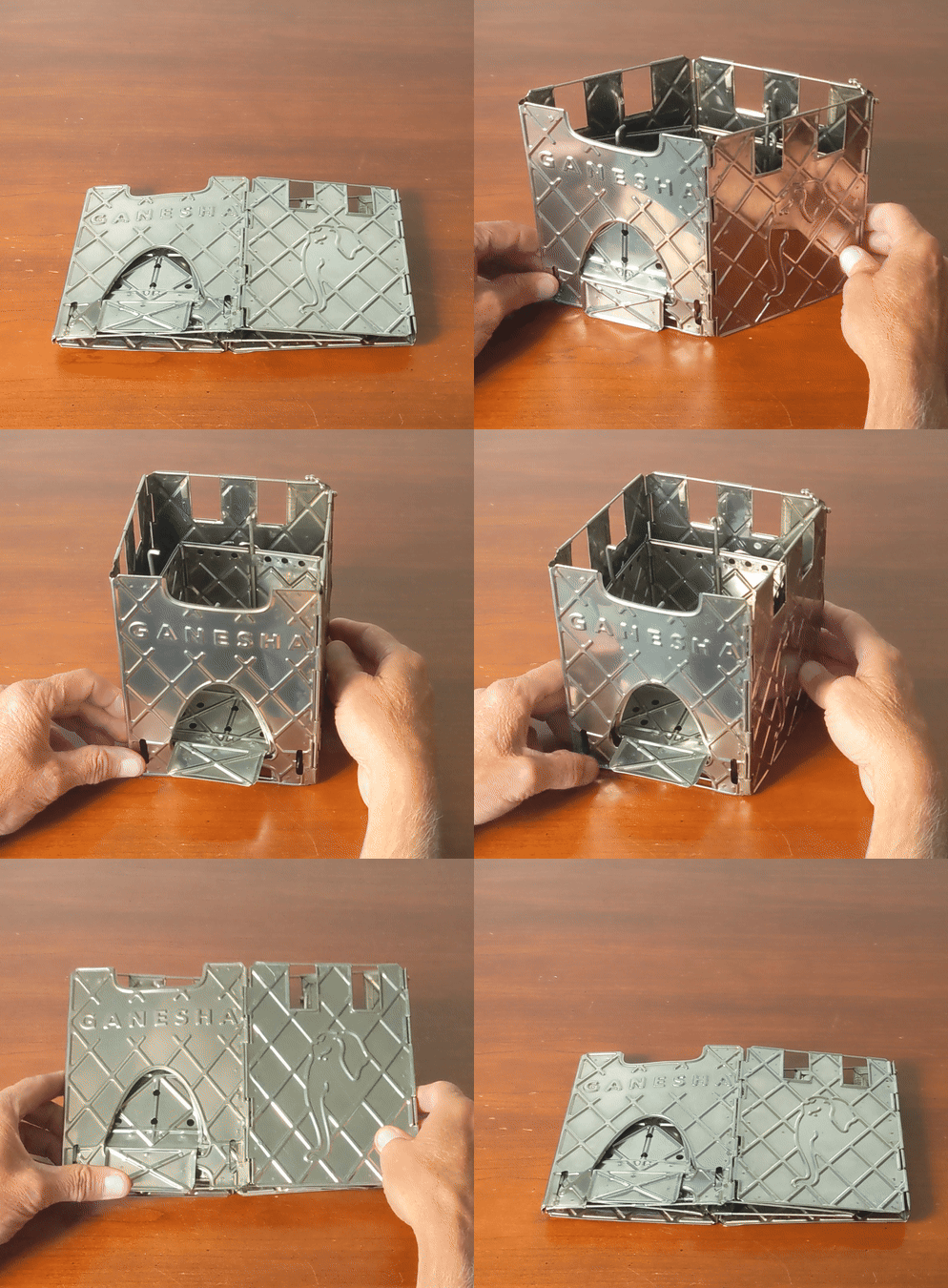
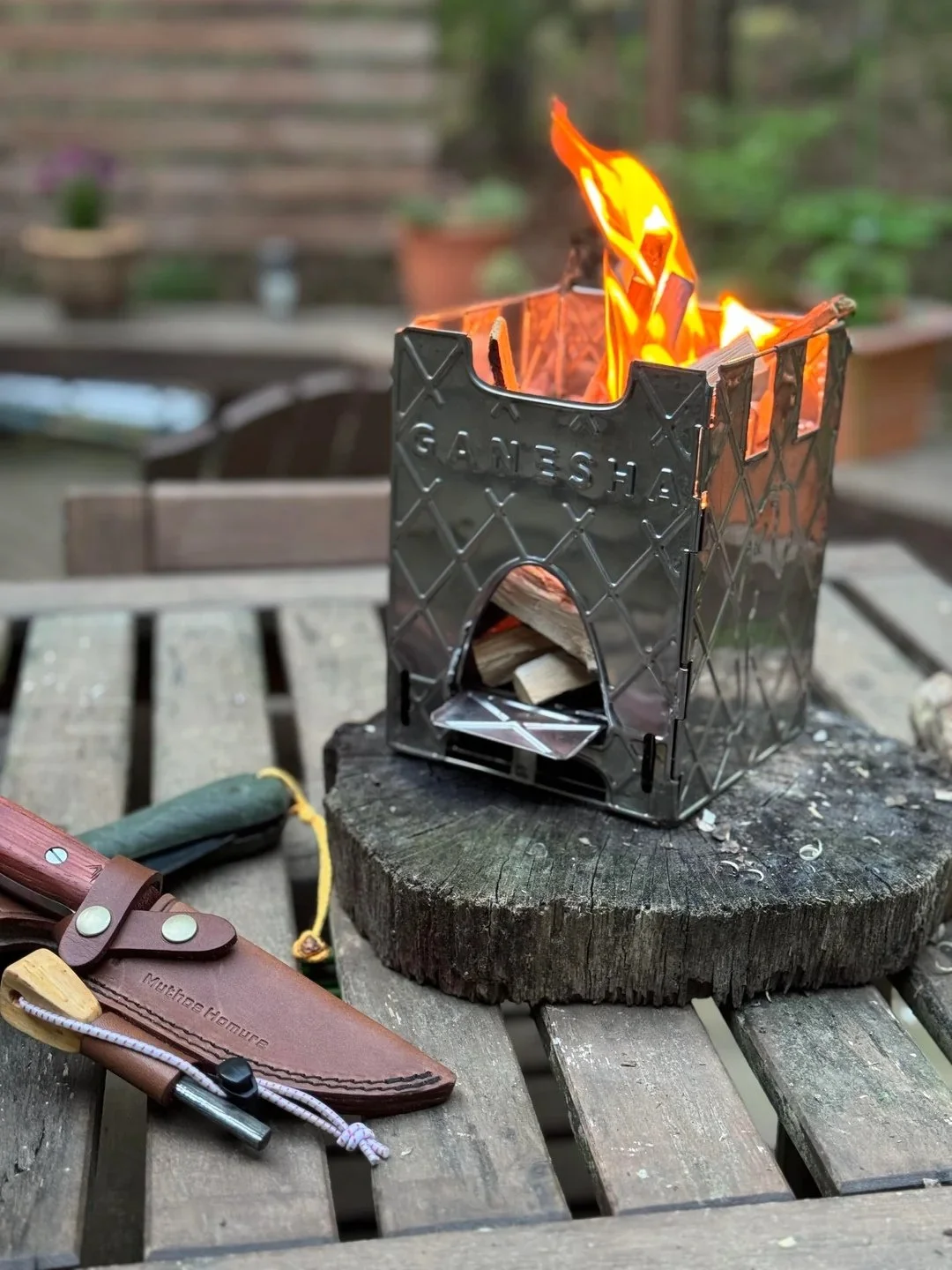
The 'silly look' is two nested boxes of sheet metal with visible air gaps — the gap is what preheats secondary air before it reaches the combustion zone. It makes the fire burn hot and clean. Less silly once you've seen it burning.
And the Name? Who is Ganesha?
Ganesha is the Hindu god of welcome. Over a billion people in India and Nepal put a Ganesha carving on their door to welcome in the world. The Ganesha Cookstove Project is a humanitarian venture - we distribute stoves to villagers there - and we wanted a name that everyone would recognize and remember.
Why Folding? Why Ultralight?
For most people traveling in the backcountry, or gallivanting around the world, volume is the enemy. The Ganesha folds to half an inch and slips easily into a bag. The engineering: a folding stove that's rigid enough for a cookpot AND precise enough for gasification, while collapsing flat. That's why it took years to get perfect and earned a patent.
The weight math: 7.8 oz stove, zero fuel weight. Gas stove plus canisters for 19 days? The Ganesha wins, and the fuel never runs out.
What’s Special About Backcountry Fire
A backcountry fire demands something: finding fuel, coaxing flame, adjusting to wind. That small competence, repeated at dusk after a long day, is deeply satisfying. The Ganesha makes it clean without making it push-button.
What to Read
The Long Walk by Slavomir Rawicz. Seven people escape a Siberian gulag and walk to India through the Himalayas. Fire, food, extreme survival. Makes you grateful for a working stove.
"Only by going alone in silence, without baggage, can one truly get into the heart of the wilderness."
— John Muir
More info at ganeshastove.com. Use code DISPATCH10 for 10% off.