
May 2026 · May Day Sale · The Science Behind the Stove · Stephen J Reid
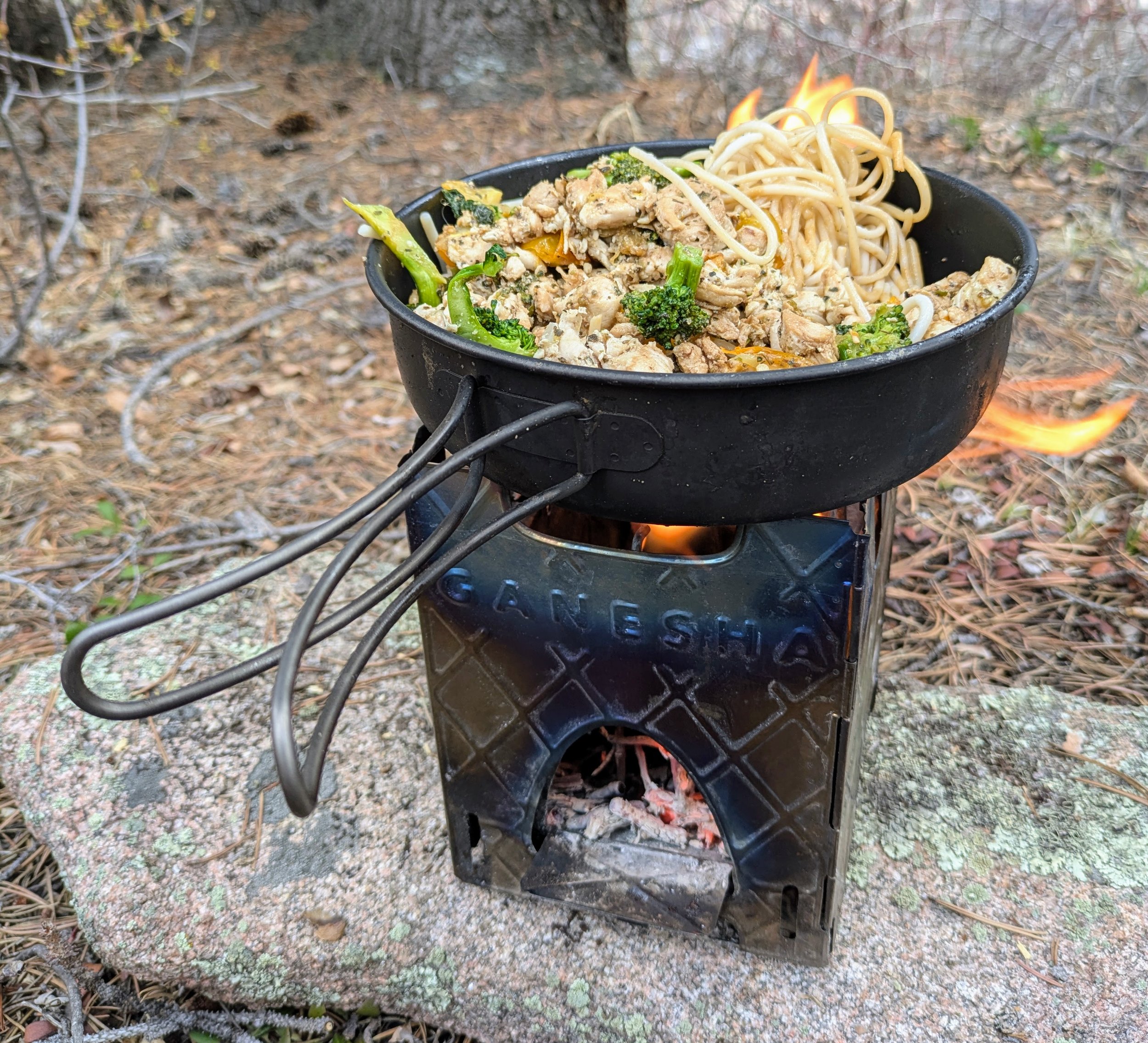
Cooking Thai curry
Finally! Our May Day Sale. Everything at ganeshastove.com is 20% off until May 7. Domestic US shipping is free, and we ship anywhere else in the world for $20 a stove.
In this issue, we share a little bit of the science behind the Ganesha stove, and feature Stephen J Reid, one of our favorite YouTubers.
Why Campfires Smoke and the Ganesha Doesn’t
Part of the process of designing the best possible wood-burning backpacking stove was learning how fires work. One of the surprising things: wood is almost 100% combustible. Smoke is not a waste product of combustion - it will burn, given the right conditions. Smoke is made up of unburned organic gases and carbon particles that the fire generated but lacked the heat or oxygen to ignite. Every wisp of smoke from your campfire is fuel converted to gas, then wasted into the atmosphere. A smoky fire is an inefficient fire.
The key factor is temperature. Wood doesn't burn directly. When heated, it first drives off moisture (thus the hissing and popping), then at 400°F (200°C) begins to chemically decompose through a process called pyrolysis, releasing combustible gases: carbon monoxide, hydrogen, methane, volatile organics. These gases are what actually burns, not the wood itself. The wood becomes charcoal, which will later burn at much higher temperatures. A standard campfire rarely reaches the sustained temperatures needed to combust these gases before they escape. The fire zone is too cool at the edges, too oxygen-variable, too chaotic.
At 900°F (500°C), something fundamental changes. Combustible pyrolysis gases will ignite if they encounter adequate oxygen at this temperature. This is the threshold the Ganesha is engineered to exploit. Its double-wall construction creates a channel between the inner and outer chambers. As the primary fire heats the inner chamber, the air in this channel gets very hot. This superheated secondary air naturally flows upward, and comes in at the top of the combustion zone, right where smoke is forming and trying to escape. The smoke ignites. Instead of a yellow, sooty flame, you get a bright orange flame of near-complete combustion. The hotter the fire gets, the more efficiently it burns; the more efficiently it burns, the hotter it gets.
This is why the Ganesha's performance improves noticeably after the first minute or two. The stove is warming its own walls, preheating its own secondary air, climbing toward sustained gasification temperature. It’s thermochemistry, but it feels like the easiest fire you’ve ever made.
Influencer Spotlight: Stephen J Reid
Stephen J Reid is a Northern Ireland-based filmmaker, outdoor explorer, and YouTuber. His weekly videos include adventure, hiking, trail running, and visits to places like Narnia (or at least, the area where CS Lewis grew up). Half the fun of the videos comes from his wacky, ebullient personality. He cheerily goes on long adventures to cold, wet, and miserable places, and narrates his journeys.
His verdict on the Ganesha was characteristically direct:
“Works a treat. This thing worked quite well and weighs absolutely nothing. I am impressed.”
— Stephen J Reid
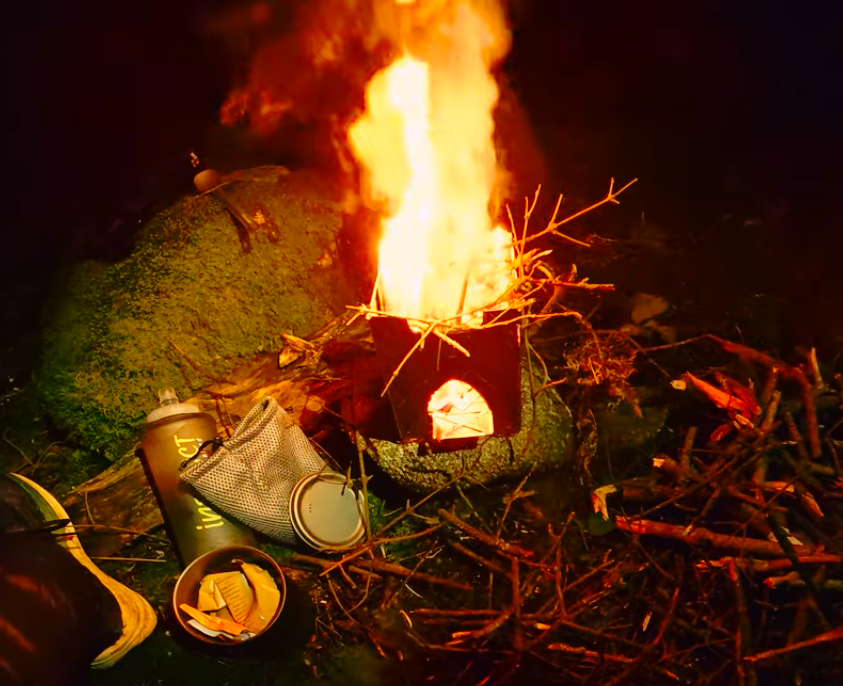
Stephen had no trouble getting a roaring fire going in the Ganesha stove.
The review appeared in his “7kg of Comfort” wild camp load-out video, where it was tested on-trail, not in a studio, in conditions where it actually had to perform. Temps dropped below freezing, Stephen stayed dry and warm, and he had a grand old time. Also, he stopped near the end of his 16-mile backpacking trip to get a burger - not usually a part of my wilderness experiences, but I absolutely approve.
🔥 An Ode to Backcountry Fire
I think most people will agree that there's something special about cooking on a wood fire in the backcountry. It isn't the food (though the food is better) - there is genuine chemistry when you cook over wood, and the smell alone is fantastic. It's something more primal: the sense that you are doing a thing that humans have done, in essentially the same way, for the entirety of human history. Tens of thousands of years of fire-making. Every ancestor you have, going way, way back, gathered around a fire at the end of the day. It’s no wonder we like it.
You find the firewood, and learn more about the landscape while you’re at it. You build the fire, which requires patience and sequence. The reward is a warm, crackling fire and the promise of hot drinks and tasty food. The Ganesha makes this lighter and more efficient. It doesn't make it easier in the sense of removing the engagement. It removes the frustration, so the engagement is all that's left.
Share Your Fire - #GaneshaStove
Have you taken your stove somewhere worth seeing? We feature reader photos in every issue. Tag us with #GaneshaStove on social media, or reply to this email with a photo and two sentences about where you were and what you were up to.
Click here to reply now: #GaneshaStove
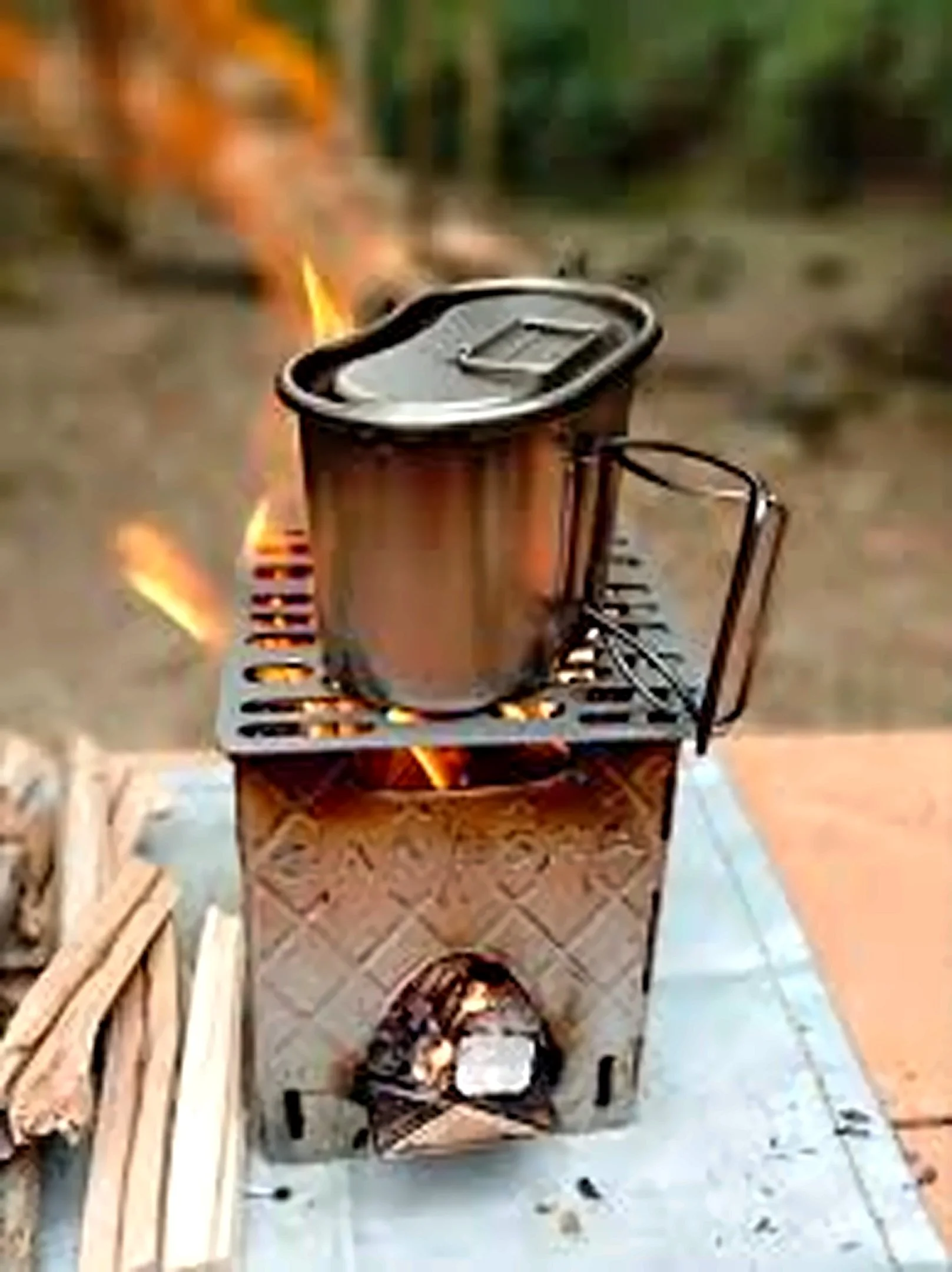
Thanks to subscriber Alex Lam for this month’s photo!
What to Read
Endurance by Alfred Lansing - the incredible story of the survival of all the crew of Ernest Shackleton's 1914 Imperial Trans-Antarctic Expedition. The ship was crushed by pack ice and sank. The crew survived on ice for months, made an open-boat crossing of the Southern Ocean, then crossed South Georgia Island's unmapped mountains on foot. The ship's cook, Charles Green, created a “blubber stove” that burned seal and penguin fat. They carried the stove to their ice camps and to Elephant Island, and produced hot meals in conditions that would have broken most people. Perfect for reading next to a fire.
“Our forefathers had civilization inside themselves, the wild outside. We live in the civilization they created, but within us the wilderness still lingers. What they dreamed, we live, and what they lived, we dream.”
— T.K. Whipple, Study Out the Land
More info at ganeshastove.com. Storewide sale 20% off til May 7, but you can always use code DISPATCH10 for 10% off.