
November 2026 · Ganesha’s Humanitarian Stoves · Gasification · Nepal TV Video
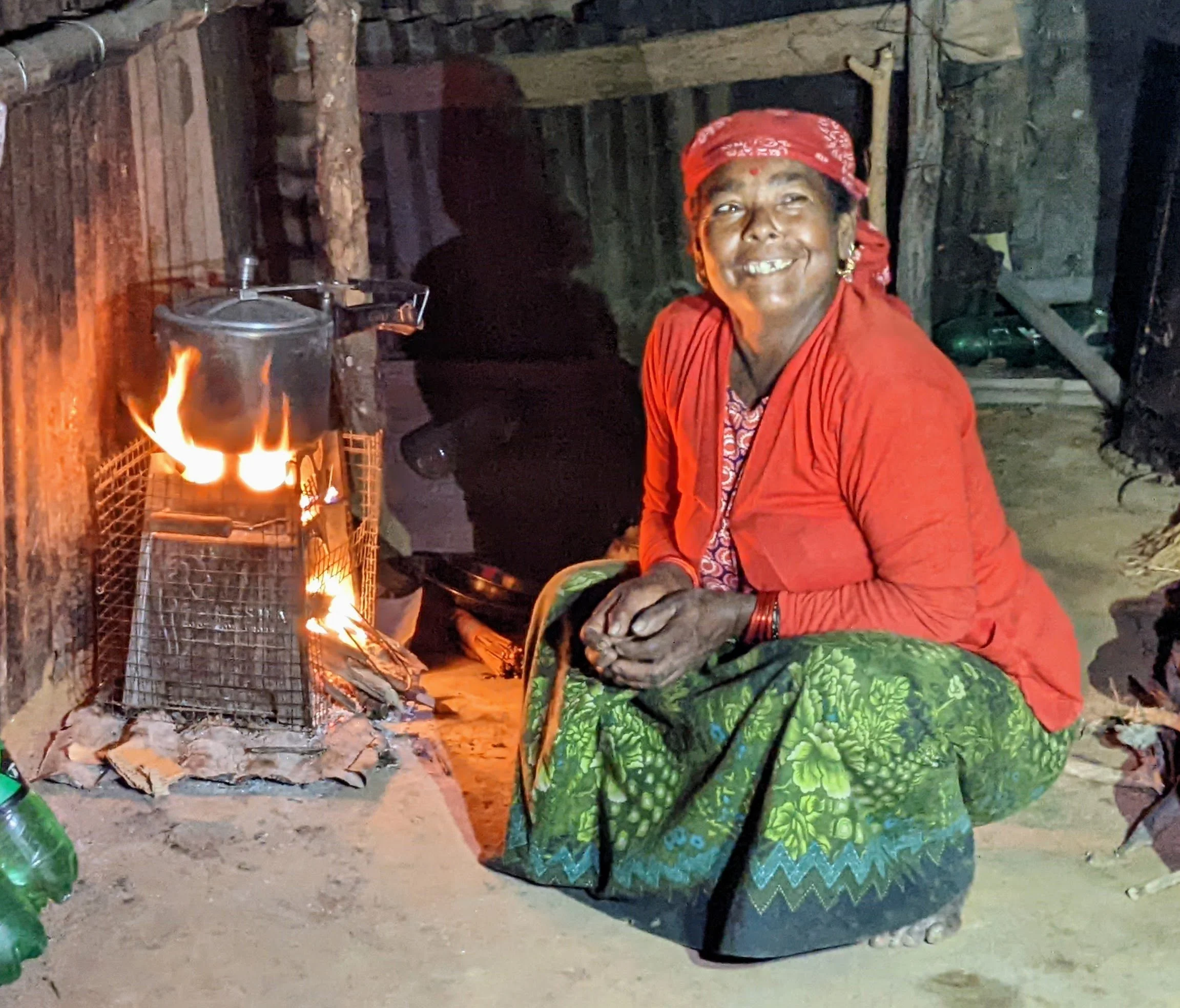
Shanta Maya Pariyar in Sera Bazar, Nepal, showing off her Ganesha humanitarian stove
We don’t just make ultralight stoves for people who love the outdoors. We also make bigger, indestructible versions for villagers in Nepal and India. Including Buddhist monks! This is the humanitarian side of the Ganesha Cookstove Project, the place it started and the heart of how we make an impact. Over 1,000 families now cook on our stoves every day.
What’s different about the humanitarian stoves
Many Nepali grandmothers helped design our humanitarian stoves. I went to Nepal in the wake of the 2015 earthquakes, 30 stoves in hand, funded by local donors. And while the grandmothers in the village of Brabal, Rasuwa liked the stoves, they had many modifications they wanted me to make. Bigger, stronger. They showed me the firewood they use, the size it is traditionally cut to, and how big their pots and kettles are. I went home and did a total redesign, using thicker stainless steel, a bigger fuel opening, and a design that packed flat but could be assembled without tools. Back to Nepal. More input. After several iterations, I knew I had made great progress, because I got the ultimate response: “I want to buy this stove. How much?”
Where they are being used and how
Working with several non-governmental organizations (NGOs, aka nonprofits), we distributed stoves to 8 villages across central Nepal, focusing on villagers that were disadvantaged due to caste, single-mother households, and refugees. We also distributed 400 stoves in the McLeod Ganj hills of Dharamsala, India. That area is the adopted home of the Dalai Lama, head of Tibetan Buddhism. In India, we focused on Buddhist monks and nuns who live reclusive lives of meditation in the hills above the Dalai Lama’s temple.
We have been doing follow-ups with villagers, and found that they use the stoves for about 80% of their cooking needs. Why not 100%? In the Himalayas, most villagers have animals (goats, sheep, cows) and make them a warm mid-afternoon meal. To do this, they use enormous pots (up to 3 feet in diameter), and they like to use an open fire for it. Similarly, many villagers make their own distilled spirits, using aluminum and copper stills. These come in all sizes but are often 2 to 3 feet in diameter, so they heat them outside on an open fire.
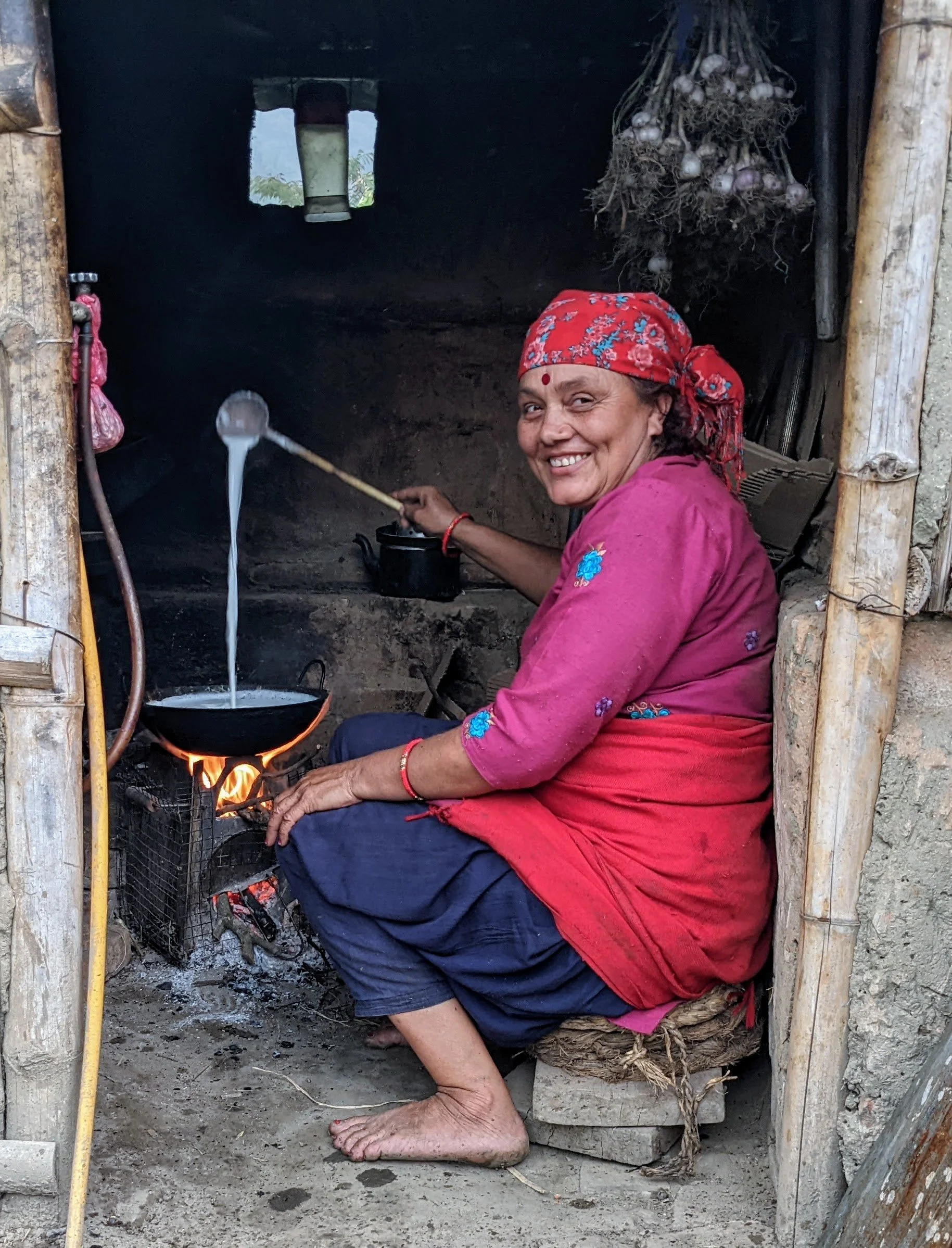
Babita Khanal Ghimire in Sera Bazar, Nepal. After boiling the cow’s milk, she served it to us (delicious).
What villagers say about them
We encountered the most incredible politeness from villagers using the stove - every person had only good things to say about the stove. So we asked pointed questions: How often do you use the stove? What do you cook on it? How much fuel does it use? And, what I think is the critical question, would you buy it? How much would you pay?
To summarize hundreds of surveys: 93% said they would buy the stove. The median amount they were willing to pay was about $5. Which is a lot, given that the common daily wage is less than $10.
How you can help
Our humanitarian stoves cost about $25 each, factoring in both the cost of production in India and shipping to their destination in India or Nepal. Based on our studies, villagers are willing to pay $5 to $8 for a stove. So to produce and distribute the stoves, we need donor funding to make up the difference. I am open to all suggestions for ways to find donors - that’s one of the key ways you can help!
How big is the need? Well, a minimum of 2 billion (with a “b”) people cook on open fires for every meal, every day. Most are in Asia and Africa. In Nepal, the number of households who would benefit immensely from a Ganesha humanitarian stove is 2-5 million. In India, it’s hundreds of millions.
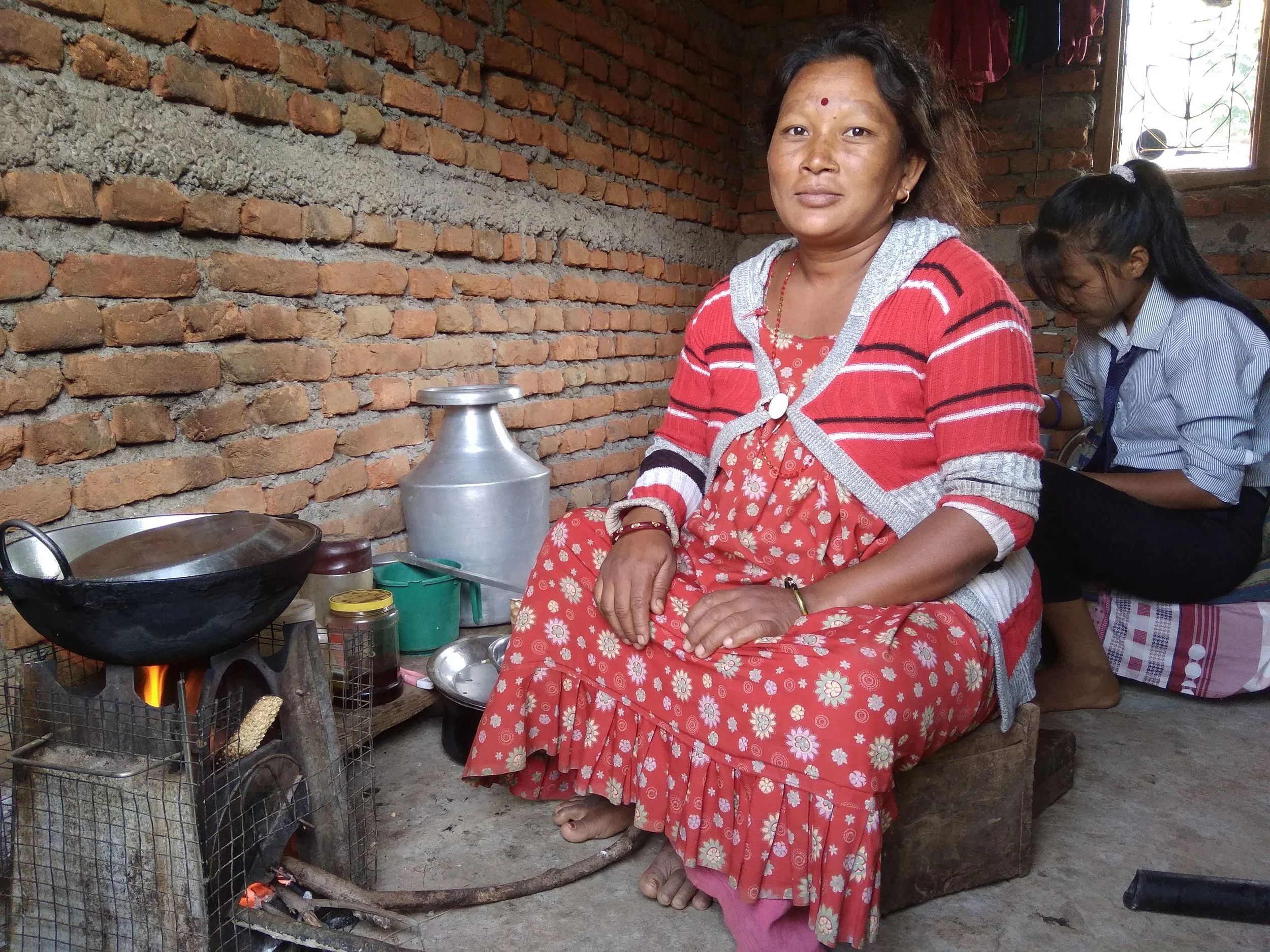
Mother and daughter in Majhigaun, Sindhupalchok, Nepal. The young girl is dressed for school and finishing up her homework.
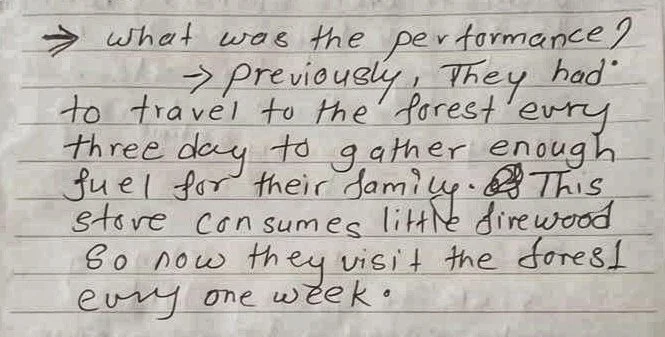
A sample of the surveys collected by our NGO partners in Nepal.
Tech Focus: What is a gasifying stove?
Gasifying is short-hand for burning smoke. Almost 100% of smoke is flammable, it just doesn’t have the right mix of oxygen, heat and flame. So a gasifying stove pushes hot, fresh air into the smoke and provides a flame. When the smoke burns, efficiency goes from about 15% up to 50%+. Inventors in the mid-20th century realized that if you had a double-walled stove, air would naturally rise up between the two walls and get hot. Add a diverter at the top, and that hot air flows into the fire.
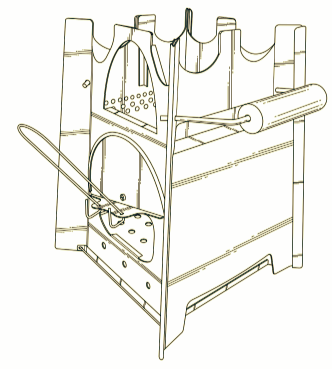
Humanitarian stove design, from the US patent.
A Ganesha Stove Makes a Great Christmas Present
Christmas is right around the corner. If you are considering getting a stove for someone in your life, now is the time to get it. Be sure to use your 10% subscriber discount with the code DISPATCH10. And yes, 100% of profits still go to our humanitarian work.
Video Spotlight: Nepali Women Cooking
I worked with PrimeTV in Nepal to make a video about the humanitarian stove, and Nepali women are the stars of the show.
“There is something about the Himalayas not possessed by the Alps, something unseen and unknown, a charm that pervades every hour spent among them, a mystery intriguing and disturbing. Confronted by them, a man loses his grasp of ordinary things, perceiving himself as immortal, an entity capable of outdistancing all changes, all decay, all life, all death.”
— Frank Smythe, a renowned English mountaineer, author, photographer, and botanist
More info at ganeshastove.com. Use code DISPATCH10 for 10% off.